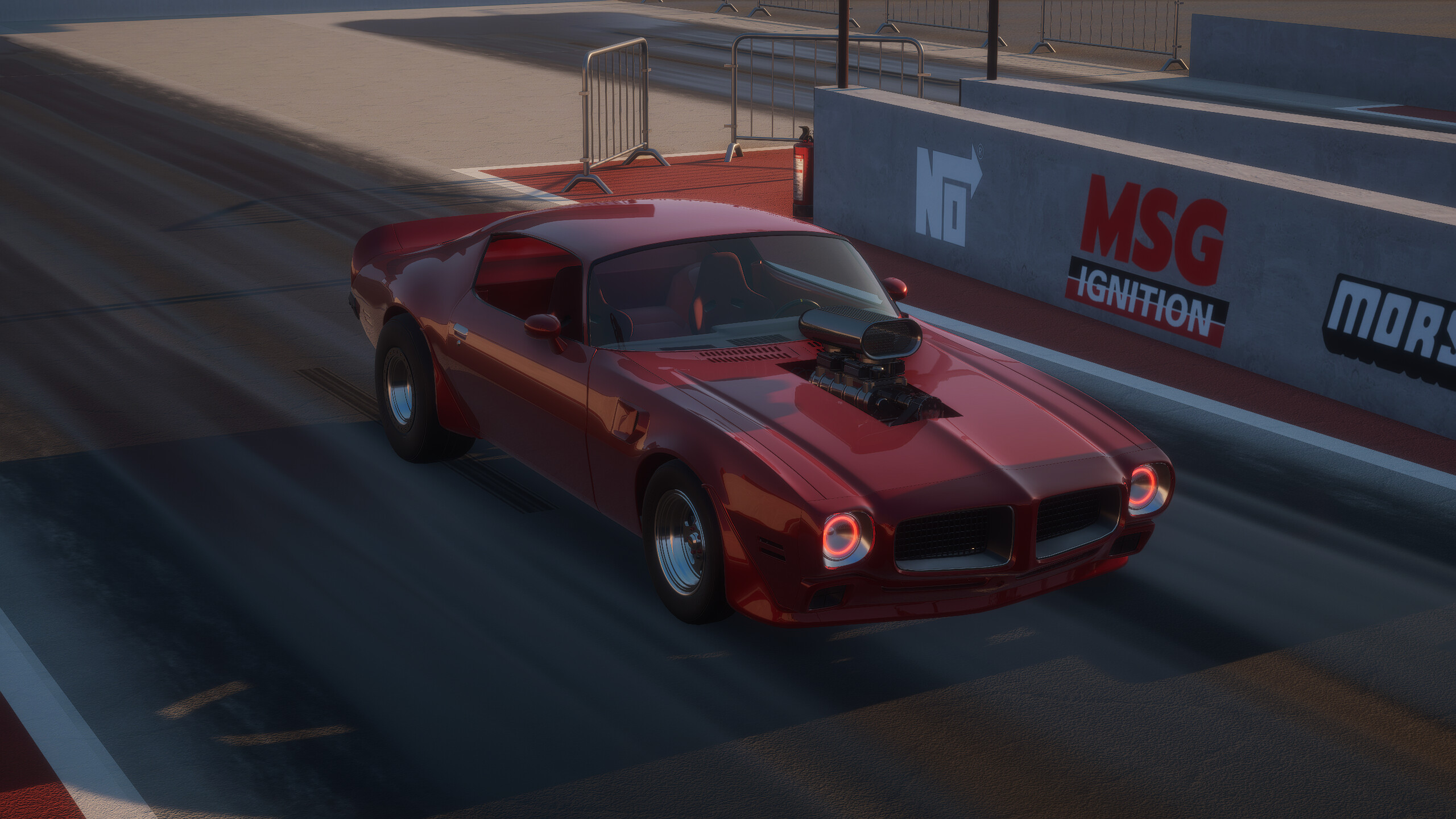
Breakout Garage Early Access: The Ultimate Tuning Guide
Dive into the Breakout Garage early access experience. Learn how to build, tune, and race old-school American muscle cars in this deep Texas simulator.
Published:
Video Guide
BREAKOUT GARAGE Early Access! Building a Drag Truck From Scrap 🏁 | Car Building & Racing SimulatorTable of Contents
The shimmering heat of Marfa, Texas, isn't just a backdrop; it is the crucible where your mechanical skills are tested. Entering the breakout garage early access phase represents a significant milestone for fans of deep automotive simulation. Unlike arcade racers that prioritize speed over substance, this title, developed by a dedicated two-person indie team, focuses on the tactile reality of the garage life. Whether you are stripping a rusted Chevy Blazer down to its frame or fine-tuning the air-to-fuel ratio on a high-rise intake, the breakout garage early access experience demands patience, precision, and a genuine love for American muscle.
In this comprehensive guide, we will explore the core mechanics of the current build, analyze the physics-driven tuning systems, and provide actionable strategies to turn a used car lot "beater" into a drag strip champion. From understanding how engine displacement affects torque to mastering the tree at the local strip, here is everything you need to know about navigating this ambitious racing simulator.
Getting Started: The Used Car Dealer and Initial Builds
Your journey begins at the used car dealership, a desolate but atmospheric lot where randomly generated vehicles await a second chance. During this stage of the breakout garage early access, players are presented with a variety of conditions, mileages, and engine configurations. Choosing your first project is the most critical decision you will make, as your starting budget is limited, and parts wear and tear are simulated from the moment you turn the key.
Community reports suggest that the 1967 Impala and the K5 Blazer are currently the most popular starting platforms. While the Impala offers a classic silhouette and decent aerodynamics, the Blazer provides a versatile 350 cubic inch (CI) V8 platform that is highly receptive to early-game modifications.
Initial Vehicle Inspection Checklist
When browsing the lot, don't just look at the price tag. Use the inspection tools to check the following:
Component
What to Look For
Impact on Performance
Engine Type
Inline-6 vs. V8
V8s offer higher ceiling for drag racing; I6 is cheaper to maintain.
Differential
Open vs. LSD
Open diffs lead to the "one-wheel peel," making launches difficult.
Rust Levels
Patina vs. Structural
Community joke: "Rust is lighter than carbon fiber," but high wear reduces part HP.
Engine Health
Misfires/Lifter Tick
Audible cues indicate worn valves or pistons that need immediate replacement.
The "Rust" Strategy
If you are short on cash, look for a high-mileage V8 with a rusty body. You can sell non-essential body parts like bumpers and spare tires to fund engine internals. Every pound saved improves your power-to-weight ratio.
Deep Mechanical Systems: The Physics of Tuning
One of the standout features of breakout garage early access is the "First-Person Mechanic Mode." You aren't just clicking buttons in a menu; you are physically unbolting headers, removing distributors, and inspecting spark plugs. The game simulates engine thermodynamics and airflow with surprising depth. For instance, changing your intake manifold to a high-rise tunnel ram isn't just a cosmetic choice—it alters the engine's volumetric efficiency and moves the power band higher into the RPM range.
Understanding Engine Internals
To succeed in the later stages of the career mode, you must move beyond bolt-on parts. Tearing down the block allows you to replace cast components with forged alternatives. This is essential if you plan on adding boost or high-compression pistons later.
Part Upgrade
Performance Benefit
Why It Matters
Forged Crankshaft
Higher RPM limit
Prevents "rod knock" and engine failure under high stress.
High-Compression Pistons
Increased Torque
Essential for naturally aspirated builds to gain off-the-line grunt.
Performance Camshaft
Better Airflow
Moves the torque curve; choose based on whether you race ovals or drag strips.
High-Output Distributor
Reliable Ignition
Prevents misfires at high speeds, ensuring consistent quarter-mile times.
According to player experience, a common mistake is ignoring the condition of the bearings and oil pan. If these parts are at low health (below 40%), your engine may seize mid-race, costing you both the entry fee and expensive repair bills.
Mastering the Drag Strip: Staging and Reaction
Once your build is running smoothly, it’s time to head to the strip. The breakout garage early access version features accurate 1/4 mile and 1/8 mile racing with a functional "Christmas Tree" timing system. Drag racing here is as much about the driver's psychology as it is about the car's horsepower.
The Staging Process
The Burnout: If you have rear-wheel drive and street radials or slicks, a burnout is necessary to heat the rubber and increase the friction coefficient.
Pre-Stage: Slowly creep forward until the top yellow lights illuminate.
Stage: Move inches forward until the second set of yellow lights turn on. You are now ready to race.
The Launch: Watch the tree. In "Pro Tree" mode, all three ambers flash simultaneously before the green. In "Standard Tree," they cycle down.
Improving Your Times
If you find yourself stuck in the 16-second range with a 350 V8, consider your "Crash Diet." Removing the tailgate, hood, and passenger seats can shave crucial tenths of a second off your time. Additionally, pay attention to your gearing. A 4.10 rear differential ratio provides incredible acceleration but may cause you to redline before the finish line. Conversely, a 3.08 ratio is better for top speed but will make your car feel sluggish off the line.
Stalling in Gear
If your car dies every time you shift into "Drive" or "First," check your idle speed and torque converter. A worn-out torque converter or an improperly tuned carburetor can cause the engine to bog down under load.
Oval Racing and High-Speed Endurance
While drag racing is the heart of the game, the Texas open roads lead to oval tracks and time trials. These events require a completely different tuning philosophy. In the breakout garage early access, oval racing tests your car’s cooling system and aerodynamic stability.
The Aerodynamic Factor
At speeds exceeding 90 MPH, drag becomes your primary enemy. The game's physics engine calculates the surface area of your vehicle. A truck with a vertical tailgate acts like a parachute.
Community Report: Players have found that removing the front bumper and tailgate increases top speed by up to 5-7 MPH on the oval track, even without changing engine parts.
Gearing for the Oval
Gear Ratio
Acceleration
Top Speed
Best Use Case
4.10:1
Excellent
Low
Short drag strips / Street racing
3.73:1
Balanced
Moderate
General purpose / Mixed racing
3.08:1
Poor
High
Oval tracks / High-speed highway cruising
For more information on the development roadmap and official car lists, visit the official Breakout Garage Steam page to stay updated on the latest patches.
Economy and Progression: Turning a Profit
The economy in breakout garage early access is designed to be realistic. Parts aren't cheap, and race winnings are hard-earned. To build a "dream car," you must engage in the "restore and sell" loop. By purchasing junkers, repairing the engine to 90%+ health, and applying a fresh coat of paint (or even just cleaning up the patina), you can flip vehicles for a significant profit at the used car dealer.
Delivery Jobs
If you run out of racing capital, look for delivery jobs. These missions involve transporting loads across the Texas map. While less glamorous than drag racing, they provide a steady stream of income that isn't dependent on your car's performance. Just be careful—hauling heavy loads with worn-out suspension will lead to handling issues and potential crashes.
Frequently Asked Questions
How long will Breakout Garage stay in Early Access?
The developers, Breakout Studio, have stated that the breakout garage early access period is expected to last approximately 2 to 3 years. This time will be used to expand the car roster, add more engine types, and detail the Texas-inspired open world.
Does the game support steering wheels and shifters?
Yes, the breakout garage early access version currently supports a wide range of racing wheels and external shifters. It also includes force feedback settings to help you feel the weight transfer and tire grip during high-speed maneuvers.
Can I play multiplayer in the current version?
The game features Peer-to-Peer multiplayer. You can host or join a server, meet other players at the drag strip, and challenge them to races using an in-server lobby system. This is a core part of the breakout garage early access experience, allowing for community-run tournaments.
What are the minimum system requirements?
To run breakout garage early access smoothly, you will need at least an Intel Core i3-8100 or AMD Ryzen 3 1200, 8 GB of RAM, and a GeForce GTX 1050ti or Radeon RX 560 4GB. For the best experience with high-fidelity physics, a GeForce RTX 3060 is recommended.
Conclusion: The Road Ahead
The breakout garage early access is a love letter to the grease-stained hands of the DIY mechanic. While it is still in development, the core loop of buying, building, tuning, and racing is already robust. By focusing on the mechanical "why" behind every part change, players can find a level of satisfaction that few other racing games offer. Whether you are chasing a 7-second quarter-mile or just cruising the Texas backroads in a rusted-out Blazer, the potential for this simulator is as vast as the Lone Star State itself. Keep your wrenches ready and your timing light handy—the garage is open.