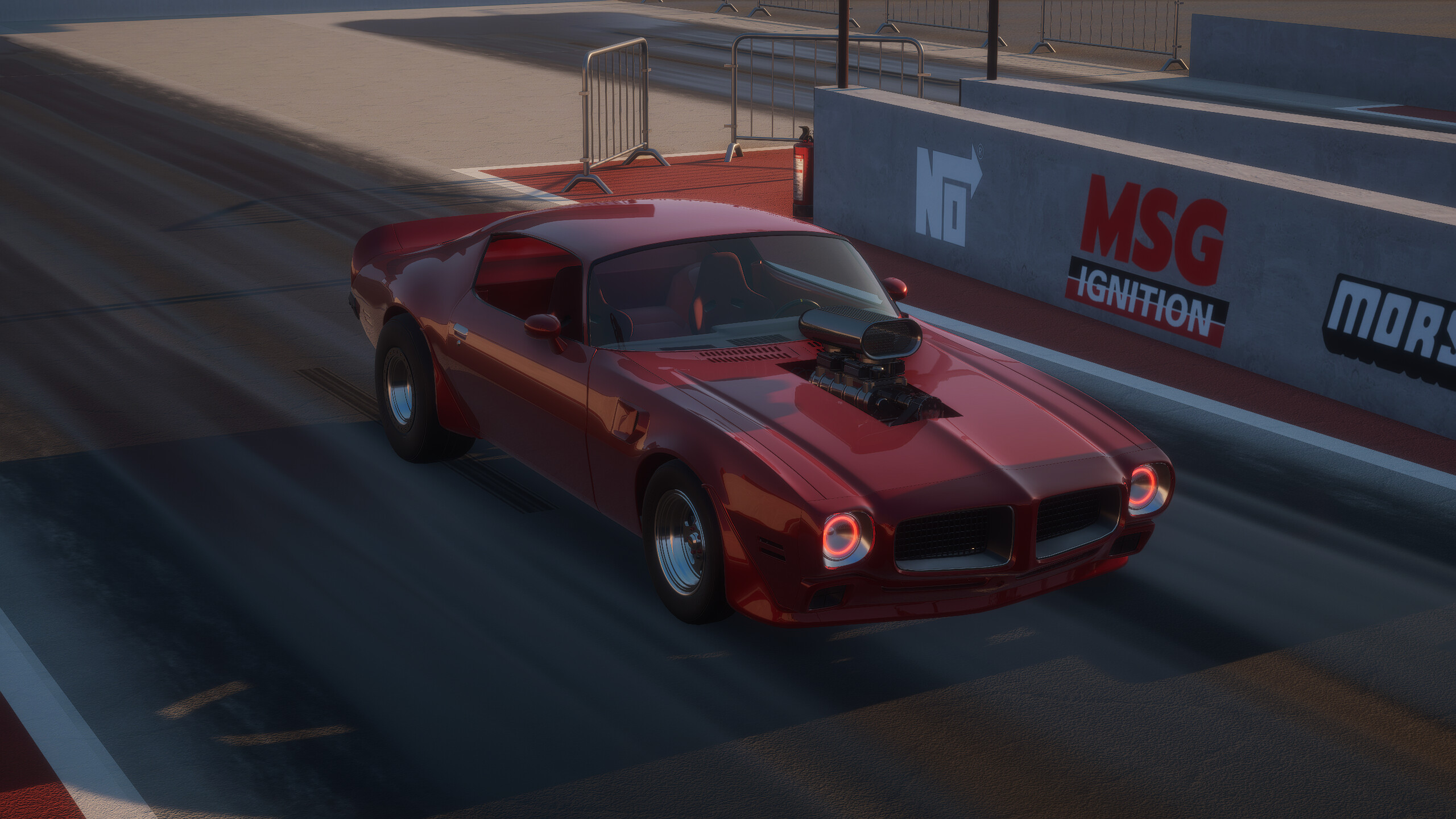
The Ultimate Breakout Garage List: Cars, Parts, and Tuning
Discover the complete Breakout Garage list of vehicles and performance parts. Learn how to build, tune, and race American muscle cars in this deep simulator.
Published:
Table of Contents
For enthusiasts of old-school American muscle and deep mechanical simulation, finding a comprehensive breakout garage list is the first step toward dominating the drag strip. Breakout Garage isn't just another arcade racer; it is a meticulous open-world driving and racing simulator where every bolt, belt, and carburetor adjustment dictates whether you cross the finish line first or end up with a blown engine. Whether you are scouring the used car lot for a diamond in the rough or spending hours in the workshop, understanding the full breakout garage list of components and vehicles is essential for progression.
In this guide, we will break down the confirmed vehicle roster, the intricate web of performance parts, and the strategic maneuvers required to turn a rusty barn find into a seven-second drag beast. By leveraging community reports and developer insights, we provide a roadmap for both novice mechanics and veteran tuners looking to maximize their efficiency in the Texas-inspired open world of Breakout Garage.
The Confirmed Breakout Garage List of Vehicles
Building a racing empire starts with selecting the right platform. The game features a variety of classic American iron, ranging from heavy-duty trucks to iconic muscle cars. According to current community reports and internal game data, the vehicle selection emphasizes "damageable" realism, meaning your choice isn't just about aesthetics—it’s about structural integrity and weight distribution.
Below is the current breakout garage list of confirmed vehicles available for players to buy, restore, and race:
Year
Vehicle Name
Internal ID
Type
1978
Chevrolet Blazer
K578
SUV / Truck
1985
Chevrolet C-10
C10
Pickup Truck
1967
Chevrolet Impala
IMP7H
Muscle Car
1969
Dodge Charger
X29
Muscle Car
1970
Pontiac Firebird
FB22
Muscle Car
1973
Chevrolet C-10
C10 (Early)
Pickup Truck
2019
Chevrolet Malibu
Malibu
Modern Sedan
2023
Kia Soul
Soul
Compact
2023
Tesla Cybertruck
Cyber
Electric Truck
Choosing Your Starter
While the muscle cars like the Charger and Firebird offer the best top-end potential for drag racing, many players find that starting with a truck like the C-10 or Blazer is more forgiving for early-game delivery jobs and road course grinding due to their durability.
Understanding the Mechanical Ecosystem: Engine and Drivetrain
The heart of the breakout garage list is not just the cars themselves, but the individual components that make them run. Unlike many racing games that offer "Stage 1" or "Stage 2" upgrades, Breakout Garage requires you to interact with specific mechanical parts. You don't just "upgrade the engine"; you replace the camshaft, forge the pistons, and tune the carburetor.
Engine Internals and Performance Parts
When you open the hood, you are greeted with a fully simulated engine block. The game distinguishes between standard OEM parts and high-performance racing components.
Part Category
Key Components in the List
Performance Impact
Rotating Assembly
Forged Crankshaft, Connecting Rods, Flat Top Pistons
Allows for launch control and precise timing adjustments.
Exhaust
Headers (V2), Turbo Manifold, Downpipe
Reduces backpressure and facilitates turbo spooling.
The Tuning Philosophy
Success in Breakout Garage is often found in the "Real Tuning Focus" highlighted by Breakout Studio. Players must manage E85 fuel mixtures, ignition timing, and turbo boost levels. A common mistake among new players is installing a high-end turbocharger without upgrading the connecting rods or pistons, leading to catastrophic engine failure during a drag pass.
Economic Strategy: How to Grind for Profit
You cannot complete your breakout garage list of dream cars without a steady flow of cash. The game offers several avenues for income, each suited to different vehicle builds. Based on player experiences, the early game is a balance between high-risk racing and low-risk utility work.
Track Payouts and Opportunities
While the drag strip is the soul of the game, it is often not the most efficient way to make money when starting with a slow, "rusty and crusty" vehicle.
Event Type
Potential Payout
Requirement / Skill Level
Oval Time Trials
$500 - $10,000
Requires high top-end speed and stability.
Road Course
$1,500 - $2,500
Focuses on handling, braking, and chicane navigation.
Drag Strip (Bets)
$100 - $1,000+
Depends on reaction time and specific drag tuning.
Delivery Jobs
Variable
Low risk, but time-consuming; best for starting capital.
The Road Course Secret
Many community members report that the Road Course is the "money maker" for mid-tier builds. Even a heavy muscle car with semi-slick tires can consistently hit the $1,500 payout bracket, allowing you to fund expensive crate motors and turbo kits faster than the drag strip alone.
Advanced Weight Savings and Aerodynamics
In the quest to move up the breakout garage list of leaderboard times, weight is your greatest enemy. A stock 1967 Impala is a heavy beast, but the game allows for extreme "crash diets" to improve your power-to-weight ratio.
The "Crash Diet" Checklist
To achieve sub-8-second runs, you must gut the vehicle. Community reports suggest removing every non-essential item:
Interior: Remove passenger seats, rear seats, and the dashboard.
Body: Swap steel panels for carbon fiber hoods, fenders, and bumpers.
Unnecessary Parts: Remove wipers, door handles, trim, and even the radiator fan if your cooling system can handle short drag bursts.
Glass: Replace heavy glass windows with lightweight alternatives or remove them entirely where permitted.
Aerodynamic Adjustments
Aerodynamics (Aero) is a functional mechanic in Breakout Garage. Adding a front splitter or a rear wing isn't just for looks—it provides downforce that keeps the car stable at speeds exceeding 150 MPH.
Aero Part
Benefit
Drawback
Front Splitter
Reduces front-end lift; improves steering at high speed.
Increases drag; can scrape on uneven surfaces.
Rear Wing (V2)
Increases rear traction during launch and top-end.
Significant drag penalty; reduces overall top speed.
Fender Vents
Helps with engine cooling and air pressure release.
Minimal impact, mostly aesthetic/minor cooling.
Drag Racing Mastery: The 7-Second Setup
For many, the ultimate goal is to see their name on the leaderboard with a low 7-second pass. Achieving this requires a specific breakout garage list of parts and a very particular tune. Veteran players often utilize a "tubbed out" rear axle and massive 15x15 billet wheels to fit the widest possible drag radials.
The Community-Proven Drag Tune
Based on successful "Boss" builds shared within the community, here is a baseline for a competitive drag setup:
Tires: 395/40/15 Drag Radials (Rear) at 16 PSI; 135/30/17 Slims (Front) at 45 PSI.
Suspension: Set rear leaf springs to a high spring rate (approx. 35,000) and low ride height to prevent excessive weight transfer and wheelies.
Gearing: A 4.11 or 4.12 rear differential ratio is standard for 1/4 mile passes, providing a balance between off-the-line acceleration and top-end pull.
Launch Control: Use an Ignition Box with a "Step" function. This allows you to build boost at the line without spinning the tires prematurely.
Tire Temperature Matters
Do not skip the burnout. Warming up your tires increases the friction coefficient significantly. A "cold" launch in a high-horsepower car will result in immediate wheelspin, ruining your ET (Elapsed Time) regardless of your engine's power.
Part Repair vs. Replacement
A unique aspect of managing your breakout garage list is the condition of individual components. Every part has a percentage-based health bar. While it is tempting to always buy new, repairing parts at the workbench is often the only way to maintain a profit margin when flipping cars.
When to Repair:
Engine Blocks: If the block is at 80% or higher, a professional hone and clean can save you thousands compared to buying a new crate motor.
Body Panels: Dents and rust on the grill or trunk can be fixed cheaply to increase the vehicle's resale value at the used lot.
Basic Mechanicals: Drive shafts and oil pans are rarely worth replacing brand new unless they are completely destroyed.
When to Replace:
Connecting Rods & Pistons: If these fail, they often take the whole engine with them. Always use 99% or 100% condition internals for racing.
Belts and Hoses: These are inexpensive. A snapped accessory belt during a race can cause overheating and a DNF (Did Not Finish).
Tires: Once the tread is gone, the grip loss is exponential. Never race on bald street tires.
Future Content and Community Expectations
As Breakout Garage continues its development through Alpha and toward a full release, the breakout garage list is expected to expand. The developers at Breakout Studio have hinted at more "Texas Open Road" features, including more diverse racing events and a wider array of crate motors, including big-block V8 options and modern EFI (Electronic Fuel Injection) swaps.
The community remains highly active on Discord and Patreon, where "Supporter Alpha" players test new physics iterations. One of the most anticipated updates involves the refinement of AI behavior in "Endurance" road courses, which currently challenges even the most seasoned drivers.
FAQ: Breakout Garage Essentials
What is the fastest car in the current Breakout Garage list?
While "fastest" depends on the tune, the 1969 Dodge Charger (X29) and the 1970 Pontiac Firebird (FB22) are currently the top contenders for the highest top speed and quickest 1/4 mile times due to their ability to house large V8 engines and supercharger kits.
How do I fix a car that won't start after an engine swap?
If your car won't crank after modifying the breakout garage list of engine parts, check the following:
Charge Pipe: If you added a turbo, ensure the charge pipe is connected to the carburetor.
Ignition Timing: Ensure the distributor is tuned and the spark plug wires are installed in the correct firing order.
Fuel: Check if you have fuel in the tank and if the fuel pump is functional (note: some versions may have bugged fuel pump visuals, but the part must still be equipped).
Can I make money without racing in Breakout Garage?
Yes. You can focus on "Car Flipping." By purchasing rusted vehicles from the used lot, repairing the essential mechanical components, and performing basic bodywork, you can sell the cars back for a profit. Additionally, delivery jobs provide a steady, albeit slower, income stream.
Where can I find the official Breakout Garage list of updates?
The most reliable source for updates, guides, and the community wiki is the official Breakout Garage website and their Steam community hub. Joining their Discord is also highly recommended for real-time troubleshooting and tuning advice from other players.