Master Your Breakout Garage Car Build: The Ultimate Guide
Learn how to optimize your breakout garage car build with expert tips on engine tuning, weight reduction, and drag racing strategies to dominate the Texas roads.
Published:
Table of Contents
The Foundation of a Winning Breakout Garage Car Build
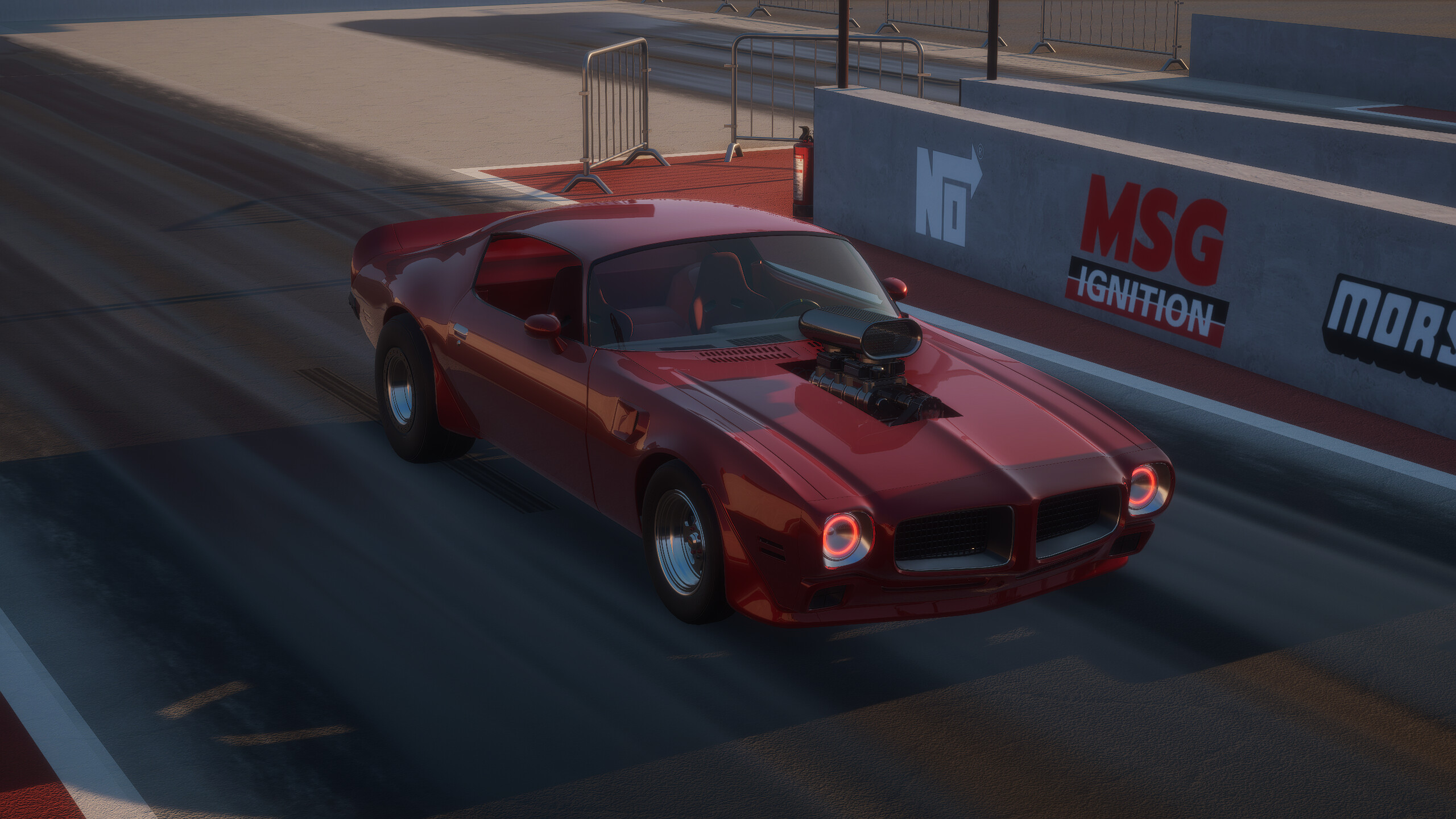
Entering the world of Texas-inspired street racing requires more than just a lead foot; it demands a perfect breakout garage car build. In this simulator, developed by Breakout Studio, the difference between a podium finish and a catastrophic engine failure lies in the fine details of your mechanical choices. Whether you are resurrecting a rusty barn find from the used car lot or fine-tuning a high-horsepower monster for the drag strip, understanding the interaction between parts is essential.
A successful breakout garage car build starts with a clear objective. Are you aiming for the high-speed consistency of oval racing, or the explosive acceleration required for 1/4-mile drag events? Each discipline requires a specific approach to engine thermodynamics, weight distribution, and gear ratios. According to community reports, players often fail by ignoring the "wear and tear" system, leading to audible indicators like lifter ticks or rod knocks that signal an impending breakdown. Before you even touch a wrench, you must inspect the internals of your chosen vehicle to ensure the block is worth the investment.
Sourcing and Inspecting Your Project Vehicle
The journey begins at the Used Car Dealer. Here, you will find an infinite number of randomly generated cars, each with its own history of neglect or care. When selecting a base for your breakout garage car build, look beyond the surface rust. A "crusty" exterior can be fixed, but a cracked engine block or a warped crankshaft can drain your initial budget quickly.
Experienced players suggest using the first-person mechanic mode to perform a thorough inspection. Check the oil pan, the cylinder heads, and the condition of the belts. If you are starting with a limited budget—typically around $10,000—you might need to prioritize mechanical reliability over aesthetics.
Component
Inspection Priority
Impact on Performance
Engine Block
Critical
Determines maximum displacement and boost tolerance.
Crankshaft
High
Affects engine inertia and RPM limits; forged is preferred.
Camshaft
High
Dictates the power band; performance cams shift torque higher.
Brake System
Medium
Vital for road courses, but often neglected in pure drag builds.
Body Panels
Low
Mostly cosmetic, though weight reduction via carbon fiber is key later.
The Budget Starter Strategy
If you find yourself short on cash, don't ignore delivery jobs. While they take longer than racing, they provide a guaranteed payout that can fund your first set of performance pistons or a turbocharger kit.
Deep Engine Internals: From OEM to Forged Performance
Once the car is in your garage, the real work begins. A comprehensive breakout garage car build involves stripping the engine down to the block. The game simulates engine thermodynamics and airflow with high precision, meaning every part you swap changes the compression ratio and displacement.
For those seeking maximum power, upgrading to forged internals is non-negotiable. Forged pistons and connecting rods can handle significantly higher cylinder pressures, which is crucial if you plan on adding forced induction. Community experience suggests that when building a Big Block engine, the 496 stroker kit is a favorite for its massive torque output.
The Role of the Camshaft and Valvetrain
The camshaft is the "brain" of your engine's breathing. A performance cam (Stage 2 or 3) will allow the engine to breathe better at high RPMs, but it may sacrifice low-end stability. When installing these, ensure you also check your distributor and ignition box. Tuning the ignition timing is vital; too much advance will cause engine knock, while too little will leave horsepower on the table.
Cooling and Lubrication
Don't let your hard work go up in smoke. The simulation accounts for heat soak and oil pressure. High-performance builds require upgraded radiators and high-flow oil filters.
Part Type
OEM Standard
Performance Upgrade
Racing/Forged
Pistons
Cast (Low durability)
Flat-top (Mid compression)
Forged (High boost ready)
Connecting Rods
Standard Steel
H-Beam Steel
Lightweight Titanium/Forged
Cylinder Heads
Iron (Heavy)
Aluminum (Better cooling)
Ported Racing Heads
Oil Pan
Standard
Baffled (Prevents starvation)
High Capacity
Forced Induction: Turbos vs. Superchargers
To truly push your breakout garage car build to the top of the leaderboards, you will eventually need forced induction. The game offers both turbochargers and superchargers, each with distinct driving characteristics.
Turbochargers: These rely on exhaust gas to spin a turbine. They offer massive top-end power but suffer from "turbo lag." You will need to manage your charge pipes, downpipes, and intercoolers.
Superchargers: Driven directly by the crankshaft via a belt, superchargers provide instant torque from the moment you hit the gas. This makes them ideal for drag racing where the launch is everything.
Tuning for Boost
Adding a turbo isn't just a "bolt-on and go" affair. You must adjust your Air-to-Fuel Ratio (AFR). A common sweet spot discovered by the community is an AFR of approximately 11.35 under load to prevent lean conditions that lead to engine failure. If you hear a "knocking" sound, immediately back off the throttle and increase your fuel delivery or retard the ignition timing.
Weight Reduction and Aerodynamics
In a game where physics are affected by the center of mass and aerodynamics, shedding unnecessary pounds is the cheapest way to go faster. A dedicated breakout garage car build often starts with "gutting" the interior. Removing the passenger seat, rear bench, and even the dashboard can shave off significant weight.
The Carbon Fiber Advantage
As you progress, you can replace heavy steel body panels with carbon fiber equivalents. This includes the hood, trunk, and doors. Furthermore, replacing glass windows with polycarbonate (Lexan) versions further lowers the center of gravity.
Aerodynamic Tuning
Aerodynamics (Aero) is a simulated force in Breakout Garage on Steam. Adding a front splitter can help with high-speed stability on the oval track, while a large rear drag wing provides the downforce necessary to keep the rear tires planted during a 180-mph pass.
Weight Reduction Step
Estimated Weight Saved
Cost Impact
Interior Gutting
150 - 200 lbs
Free
Polycarbonate Windows
40 - 60 lbs
Moderate
Carbon Fiber Panels
100 - 300 lbs
High
Lightweight Racing Seat
30 - 50 lbs
Low
The Stability Trade-off
Removing too much weight from the rear of a rear-wheel-drive car can lead to severe traction issues. If your car becomes "squirrely" at the top end of the drag strip, consider adding a wheelie bar or adjusting your rear spring rates to keep the tires loaded.
Suspension and Tire Management
Power is useless if you can't put it to the pavement. Your breakout garage car build needs a suspension setup that manages weight transfer. For drag racing, you want a "soft" rear suspension that allows the car to squat, transferring weight to the rear tires for maximum grip.
Tire Selection
The game features an in-depth tire system, allowing for stretched, straight, or "meaty" fitments.
Street Tires: Good for cruising but useless for racing.
Semi-Slicks: The best all-rounder for road courses and time trials.
Drag Radials: Essential for the strip. They offer maximum longitudinal grip but poor lateral stability.
Suspension Tuning Parameters
Using the tuning screwdriver, you can adjust ride height, spring rates, and dampening. Community reports suggest that lowering the front end slightly more than the rear can improve aerodynamics and prevent air from getting under the car, which causes front-end lift at high speeds.
Tuning Factor
Drag Racing Setting
Oval/Road Setting
Front Springs
Soft (to allow lift/transfer)
Stiff (for cornering stability)
Rear Springs
Medium-Soft
Stiff
Dampening
High Rebound
Balanced
Tire Pressure
Low (12-16 PSI)
High (28-32 PSI)
Economy and Progression: Financing Your Build
Maintaining a breakout garage car build is expensive. Between buying high-octane fuel and replacing worn-out tires, you need a steady stream of income. The Texas open world offers several ways to earn cash:
Oval Time Trials: A great way to test top-end speed. Payouts can reach $10,000 if you beat the top tier times.
Road Course Endurance: These races against AI are relentless. While difficult, they offer high payouts (up to $1,500 - $2,500 per successful run) and help you master the car's handling.
Drag Strip Betting: Once your car is consistent, you can bet against other racers. Start with the $200 bets and work your way up to the $50,000 "List" races.
Car Flipping: Buy a wreck, perform basic repairs (fix the block, replace the belts, clean the body), and sell it for a profit. This is a "realistic economy" mechanic where you must account for the cost of every bolt.
Common Mistakes to Avoid
Even seasoned mechanics make errors in their breakout garage car build. One of the most common mistakes is ignoring the "clutch reload" or stall speed. If you are using a manual transmission, dumping the clutch at the wrong RPM will either bog the engine or result in excessive wheel spin. For automatics, ensuring you have a high-stall torque converter is key to getting into the power band quickly.
Another pitfall is the "Engine Swap" trap. While sticking a massive V8 into a small chassis sounds great, the added weight and cooling requirements might actually make the car slower if not balanced correctly. Always upgrade your brakes and tires before you double your horsepower.
FAQ: Mastering the Garage Life
How do I stop my engine from knocking in my breakout garage car build?
Engine knock is usually caused by an incorrect Air-to-Fuel Ratio (AFR) or overly aggressive ignition timing. Use the tuning menu to richen the fuel mixture (aim for 11.0 - 11.5 for boost) or retard the timing by a few degrees. Also, ensure you are using high-octane fuel if you have a high-compression setup.
What is the fastest way to make money in Breakout Garage?
While delivery jobs are steady, the most efficient way to grind for cash is the Road Course time trials. Once you have a car with semi-slick tires and decent handling, you can earn $2,500 in under two minutes. For high-stakes players, winning bets on the "List" at the drag strip is the quickest path to wealth.
Do aerodynamics actually matter for drag racing?
Yes. As you exceed 150 mph, air resistance becomes a major factor. A drag wing can prevent the rear end from becoming light and losing traction, while a front splitter keeps the nose down. However, be careful not to add too much "drag," which can lower your top speed.
Can I build a car without a fuel pump or alternator?
In the current Early Access version, some players have noted that cars can run without certain accessories like an alternator or a water pump pulley for short bursts (drag passes), which saves weight and reduces engine parasitic drag. However, this is risky and may lead to overheating or battery drainage in the full version of the game.
How do I use the wheelie bar effectively?
The wheelie bar should be adjusted so it only touches the ground when the front wheels are about to lift too high. If it's too low, it will unload the rear tires and cause you to lose traction. It is a vital tool for any breakout garage car build pushing over 1,000 horsepower.