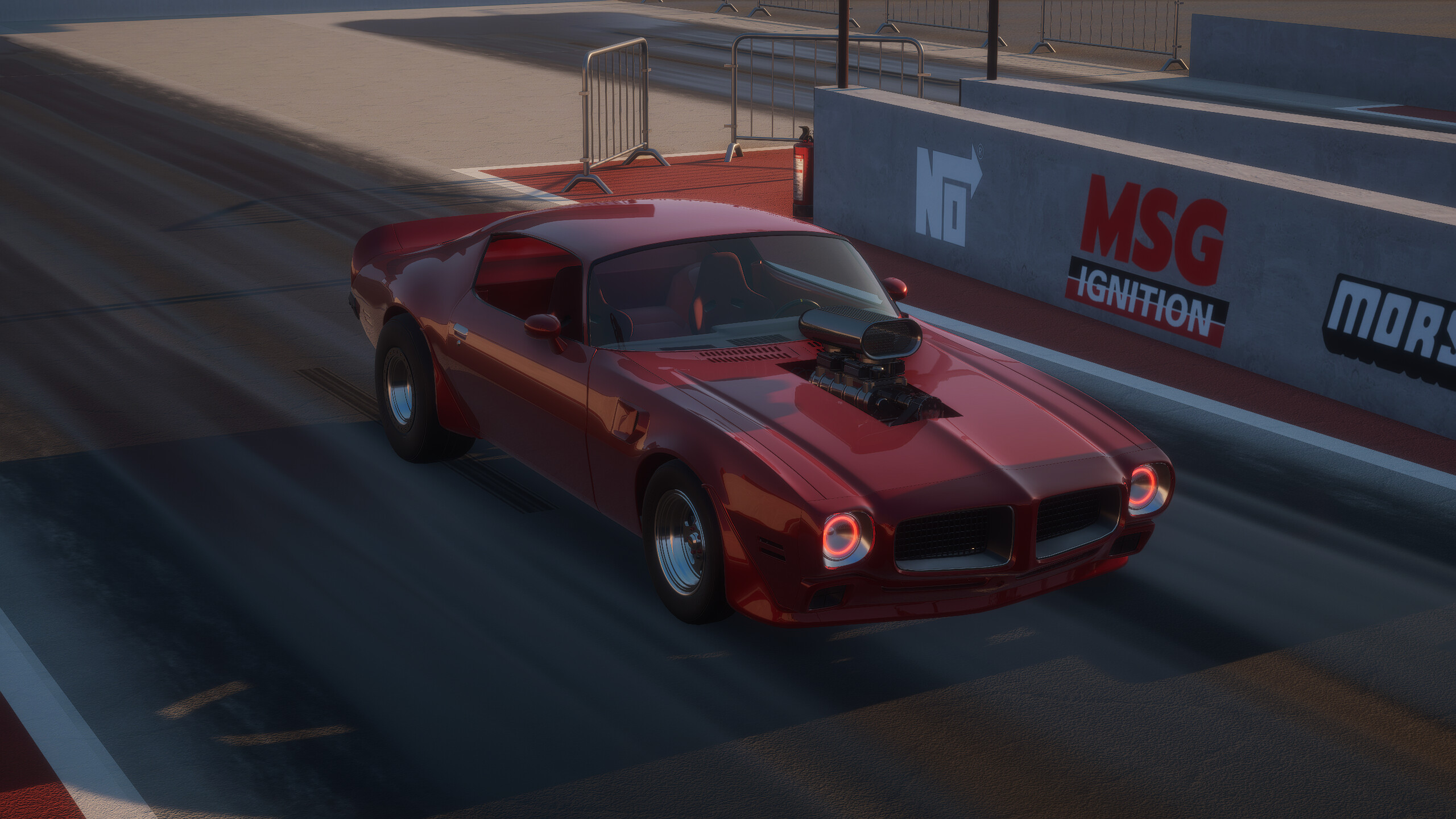
Breakout Garage Oval Racing Guide: Master the Track & Build
Master Breakout Garage oval racing with our expert guide. Discover professional tuning tips, car build strategies, and how to dominate the Texas speedways.
Published:
Video Guide
Breakout Garage - Vertex Oval Time AttackTable of Contents
When you first step into the world of Breakout Garage, the roar of American muscle engines and the smell of burnt rubber on a Texas asphalt track create an experience unlike any other. If you are looking to refine your skills, mastering breakout garage oval racing is your ultimate path to both in-game wealth and mechanical prestige. This simulator isn't just about driving; it is about understanding how every single bolt and gear ratio influences your lap times.
Why does mastering this specific discipline matter? Because oval racing provides one of the most reliable and consistent ways to grind for cash in the game. Whether you are aiming to fund a high-horsepower engine swap or simply trying to restore a rusty junker to its former glory, the oval track is your proving ground. By focusing on aerodynamics, weight reduction, and proper gearing, you can transform any basic sedan into a competitive machine.
The Foundations of Breakout Garage Oval Racing
Success in breakout garage oval racing begins long before you hit the starting line. Many new players make the mistake of jumping into the fastest car they can afford without understanding how the physics engine responds to weight and grip. According to community feedback, the core of a winning car is not just raw horsepower, but the balance between power delivery and chassis stability.
When you analyze the game's mechanics, you will find that parts affect your performance through weight, center of mass, and even engine thermodynamics. For an oval car, you want to prioritize:
Component
Goal
Impact on Oval Racing
Gearing
Tall Ratios
Higher top-end speed on banked turns
Tires
Semi-Slicks
Better lateral grip during high-speed cornering
Suspension
Stiffness
Reduced body roll in high-banked sections
Weight
Stripped Interior
Improved acceleration and cornering agility
Always remember that in this simulator, "more" isn't always "better." Adding a massive turbo might sound great, but if you cannot keep the car on the track due to understeer, your lap times will suffer.
Strategic Engine Tuning for Maximum Performance
The engine is the heart of your build, and in breakout garage oval racing, maintaining consistent power is crucial. If you are using a standard inline-6, you need to be strategic about your upgrades. Players often find that upgrading to a four-barrel carburetor and adding performance headers allows you to shift later, keeping the car in the power band for longer durations.
Incremental Upgrades
Avoid jumping straight to high-end crate motors. Instead, perform incremental engine swaps and tuning. This allows you to feel the difference in handling and acceleration, ensuring you don't overwhelm your chassis with power it can't handle.
When tinkering with your engine, keep an eye on the compression ratio and air-to-fuel mix. If you push the timing too aggressively, you risk engine failure during endurance races. As noted by experienced players, a well-tuned, lower-horsepower engine can often beat a stock high-horsepower engine because it remains stable and reliable throughout a long stint on the track.
Mastering the Art of the Oval Turn
The technique used to navigate corners is what separates novices from experts in breakout garage oval racing. Because the track features high-banked turns, your line choice dictates your exit speed, which is the most critical factor in your overall time.
Entry Phase: Approach the turn from the high side of the track to carry more momentum.
Apex: Ease off the throttle slightly to allow the car to rotate without scrubbing speed.
Exit: Gradually feed the power back in as you straighten the wheel to maintain traction.
Using a controller or a steering wheel setup significantly improves your ability to "feel" the understeer. If you find your car pushing wide, check your front tire pressure and front suspension stiffness.
Recommended Setup Configurations
Build Tier
Key Modification
Expected Performance
Entry
Stock + Weight Reduction
Baseline stability, manageable
Intermediate
3.36 Rear Gear + Headers
Improved top speed, lower lap times
Pro
Ported Heads + Semi-Slicks
High-speed endurance, aggressive cornering
Community-Driven Tips for Success
The Breakout Garage community is highly active, and players frequently share their findings on the official Steam Community Hub. A common piece of advice for those starting out is to use the "first-person mechanic mode" to inspect parts frequently. If you hear a ticking sound, it might be a sign of a worn lifter or rod knock, which can destroy your engine during an oval endurance race.
Another frequent tip involves the use of the "trash can" or used car dealer. Don't be afraid to buy a car that seems beyond repair. Often, the frame is perfectly fine, and by simply replacing the transmission, suspension, and engine components, you can flip the vehicle for a significant profit, funding your next dedicated oval racer.
Troubleshooting Common Oval Racing Issues
Even the best builds encounter problems. If you find yourself hitting a plateau in your lap times, consider these common failure points:
Transmission Slippage: If the engine revs high but speed doesn't increase, your transmission or clutch needs an upgrade.
Overheating: If you are running long endurance sessions, keep an eye on your radiator; poor airflow will cause the engine to cut power.
Unstable Geometry: If the car feels twitchy or unpredictable, your tie rods and steering linkage might be damaged or misaligned after a minor wall touch.
[!WARNING]
Avoid Wall Contact
Even minor taps against the track walls can cause significant damage to suspension components, which will ruin your alignment and make the car pull to one side for the remainder of your session.
Taking Your Build to the Next Level
Once you have mastered the basics of breakout garage oval racing, you can start experimenting with advanced aerodynamics. While the game provides fixed parts, adding a front splitter or rear spoiler can provide the necessary downforce to tackle turns at higher speeds.
Remember, the goal is a balanced machine. If you improve your aerodynamics, you might find that you need to stiffen your springs to prevent the car from "bottoming out" at high speeds. Keep a logbook—mental or physical—of your setups. Tracking your gear ratios and suspension settings for different track conditions will make you a much more efficient builder and driver in the long run.
Frequently Asked Questions (FAQ)
Q: How can I make money fast in Breakout Garage?
A: Breakout garage oval racing is one of the most consistent ways to earn money. By participating in time trials and placing high, you earn significant payouts that can be used to fund engine swaps and premium performance parts.
Q: Should I use a keyboard or a wheel setup?
A: While the game supports keyboard inputs, a steering wheel and shifter setup offers much better control during high-speed oval racing, allowing for smoother inputs that prevent you from spinning out.
Q: Why is my car slow even after engine upgrades?
A: Speed isn't just about the engine; check your gear ratios. A very short gear ratio will limit your top speed on an oval track. Try a taller gear ratio to allow your engine to reach its full potential on the straights.
Q: Can I repair individual engine parts?
A: Yes, you can repair many components using your tools in the garage. However, some parts have a limited lifespan and will eventually need to be fully replaced to ensure your vehicle remains competitive.