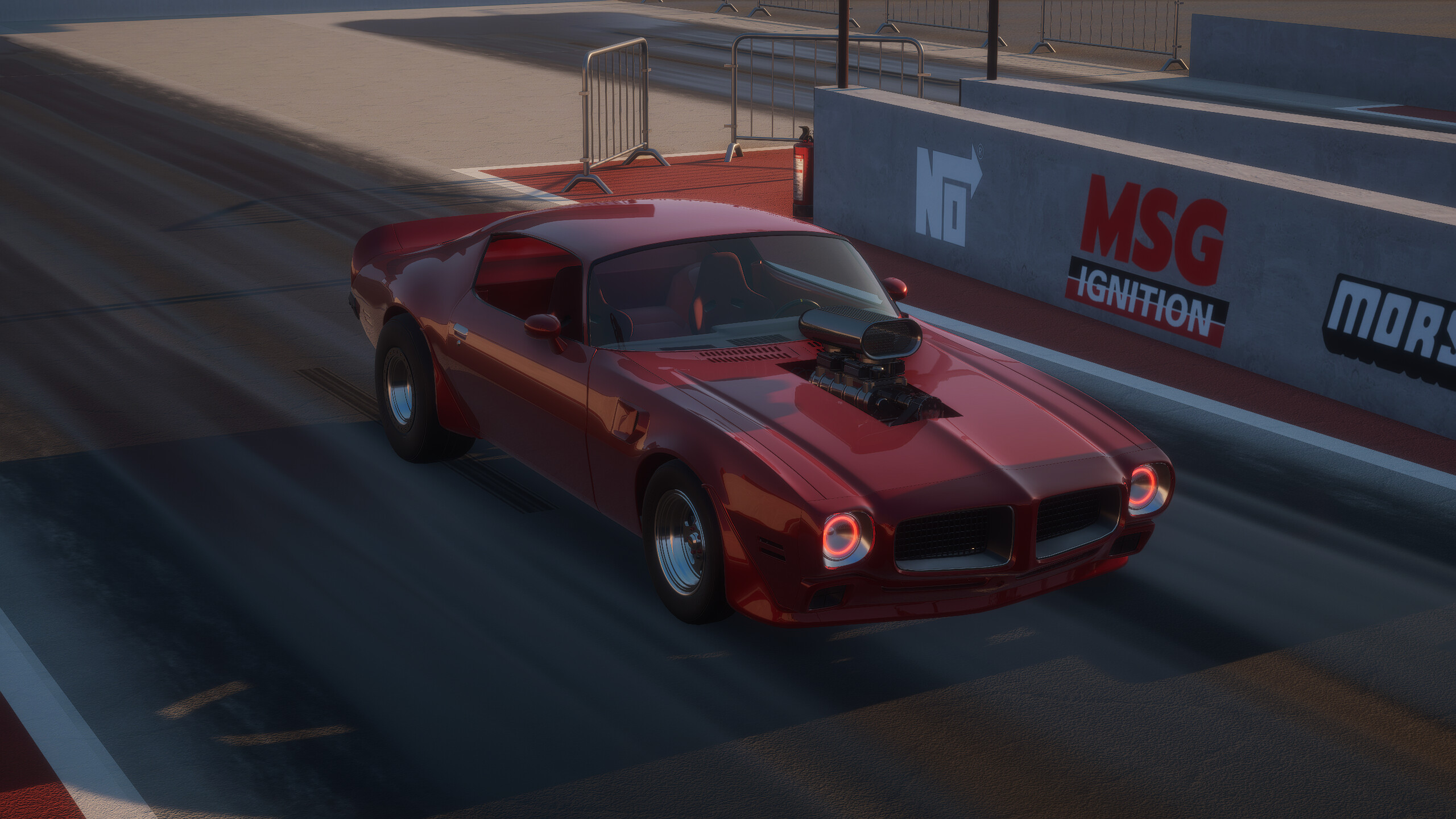
Master Breakout Garage Drag Racing: The Ultimate Tuning Guide
Discover the ultimate Breakout Garage drag racing guide. Learn expert tuning tips, engine builds, and weight reduction strategies to dominate the Texas strip.
Published:
Video Guide
Breakout Garage - First 8 Second Pass In My New Car!Table of Contents
For players entering the world of high-stakes American muscle, breakout garage drag racing represents the pinnacle of mechanical simulation. Unlike arcade racers that reward simple button mashing, this Texas-inspired simulator demands a deep understanding of thermodynamics, weight distribution, and precise ignition timing. Whether you are aiming for a low 7-second pass or trying to turn a profit on a rusty barn find, mastering breakout garage drag racing is the difference between seeing the green light and seeing your engine block explode on the tarmac.
Quick Answer
Success in drag racing within Breakout Garage hinges on three pillars: aggressive weight reduction, precise engine thermodynamics (AFR and Timing), and suspension geometry that maximizes rear-wheel traction. A competitive 7-second car requires a "gutted" interior, carbon fiber body panels, and a finely tuned supercharger or turbo setup.
The Foundations of Breakout Garage Drag Racing
At its core, the game is a simulation of the "garage life." You aren't just a driver; you are a lead mechanic responsible for every bolt and belt. The physics engine accounts for the weight of individual parts, the center of mass, and even the inertia of the engine's internal components. This means that every modification has a tangible impact on how the car launches off the line.
Community reports suggest that the early game is often a struggle between budget and performance. New players typically start with a used vehicle—often a crusty Inline-6 or a high-mileage V8—and must decide whether to flip it for a quick profit or invest in a dedicated drag build. The Texas open-world setting provides various venues to test these builds, from official drag strips to oval tracks and road courses.
Understanding the Physics Model
The game uses a sophisticated physics model where aerodynamics and weight are not just numbers but active forces. For instance, removing a passenger seat isn't just a menu option; it physically shifts the center of mass. According to player experiences, even small details like removing windshield wipers or door handles contribute to the "crash diet" necessary for competitive times.
Feature
Impact on Drag Performance
Why It Matters
Weight
Acceleration & Launch
Lower mass requires less force to move, improving the 60ft time.
Aerodynamics
Top-end Stability
Splitters and wings prevent the front end from lifting at high speeds.
Thermodynamics
Engine Longevity
Overheating leads to rod knock and catastrophic engine failure.
Tire Pressure
Traction/Grip
Lower pressure increases the contact patch for better launches.
Engine Building: From Block to Boost
Building an engine for breakout garage drag racing requires more than just buying the most expensive parts. You must consider the synergy between components. For example, installing low-compression pistons (LC V2s) is essential if you plan on running high boost from a supercharger or turbocharger. Without these, the increased cylinder pressure will quickly lead to engine damage.
Internal Components and Forged Parts
For a high-tier drag build, the community recommends a forged rotating assembly. This includes a forged crankshaft, high-strength connecting rods, and performance pistons. These parts are heavier than stock equivalents but can withstand the immense torque generated during a sub-8-second run.
Key Engine Components for Drag Racing:
Crankshaft: Forged steel for maximum durability.
Pistons: Low compression (LC) for forced induction; flat-top for naturally aspirated high-RPM builds.
Camshaft: Performance cams with high lift to keep valves open longer, allowing more air-fuel mixture into the cylinders.
Ignition Box: Upgrading to "Box 2 with Step" allows for precise timing adjustments and launch control.
Forced Induction: Turbos vs. Superchargers
While superchargers provide instant torque off the line, turbochargers offer massive top-end power. According to veteran players, a supercharger pulley ratio of 1.1 to 1 is a sweet spot for many V8 builds, providing a balanced power curve that doesn't immediately overwhelm the tires.
Engine Part
Recommended Spec (Drag)
Benefit
Pistons
+0.060 LC V2
Handles high boost without cracking.
Fuel Type
E85
Higher octane allows for more aggressive ignition timing.
Carburetor
Four-Barrel / Performance
Maximizes airflow and fuel delivery at high RPM.
Oil Filter
Performance/New
Ensures clean lubrication under high-stress racing.
The Art of the Drag Tune: Suspension and Tires
A common mistake in breakout garage drag racing is focusing solely on horsepower. A 1,000-hp car is useless if it simply spins its tires or wheelies into a wall. Suspension tuning is the "secret sauce" that separates the winners from the losers on the leaderboard.
Rear Suspension Setup
To maximize traction, the rear suspension needs to be stiff enough to prevent excessive "squat" but soft enough to allow the tires to bite. Experienced tuners often use a tubbed rear axle with a 4.11 or 4.12 differential ratio. This ratio provides a shorter gear range, which is ideal for the 1/4 mile sprint.
Recommended Rear Settings:
Leaf Springs: High spring rate (approx. 35,000) to keep the chassis stable.
Ride Height: Set to 1 (lowest) to keep the center of gravity as low as possible.
Dampers: Set to maximum stiffness to control the rebound during the launch.
Front Suspension and Weight Transfer
The front end should be light and aerodynamic. Many top-tier racers remove the front brake calipers entirely to save weight, relying solely on rear brakes and parachutes (if available) or long shutdown areas. While risky, this "weight-first" approach is a staple of the community's fastest builds.
Tuning Variable
Recommended Value
Reasoning
Rear Tire Pressure
15 - 18 PSI
Increases grip by allowing the tire to "wrinkle" and grab the track.
Front Tire Pressure
45+ PSI
Reduces rolling resistance for the front "skinnies."
Clutch Preload
Moderate
Ensures smooth power delivery without instant tire blow-off.
Differential Ratio
4.11:1
Optimal balance between off-the-line punch and top-end speed.
Progression and Economy: How to Fund Your Build
Building a 7-second car in breakout garage drag racing is expensive. A new player starting with $10,000 will quickly find that a single high-performance crate motor can wipe out their entire budget. To succeed, you must master the game's economy.
Grinding for Profit
While drag racing pays well, it is also high-risk. If you lose a bet or wreck your car, the repair costs can be devastating. Community reports suggest that the "Road Course" and "Oval Track" time trials are excellent ways to earn steady income. A decent lap around the road course can net $1,500 to $2,500, which can then be reinvested into engine parts.
The Road Course Strategy
If your car isn't fast enough for the drag strip yet, install semi-slick tires and a basic front splitter. Use the road course to grind cash. The handling improvements from slicks allow you to maintain higher speeds through chicanes, making the $2,500 payout tier much easier to reach.
The Used Car Market and Flipping
The used car dealer offers a rotating stock of randomly generated vehicles. Savvy players look for cars with decent frames but "terrible" engine conditions. By performing a full breakdown, repairing the block, and replacing cheap wear items like spark plug wires and belts, you can often sell the car for a $500–$1,000 profit with minimal investment.
Advanced Weight Reduction Techniques
In the quest for the perfect pass, every pound counts. The game allows for an incredible level of "gutting." Professional players often leave the car looking like a skeleton to achieve the lowest possible weight.
Weight Saving Checklist:
Remove Non-Essentials: Headlights, wipers, trim pieces, and door handles.
Interior Stripping: Remove the dashboard, passenger seats, and rear seats. You only need the driver's seat and a steering wheel.
Carbon Fiber Swap: Replace the hood, fenders, and bumpers with carbon fiber versions. Carbon fiber is significantly lighter than the stock rusted steel.
Glass Removal: While not always practical for street builds, removing heavy glass for lightweight alternatives (where supported) is a common community tactic.
The Impact of Aerodynamics
As you reach speeds exceeding 150 mph, aerodynamics become crucial. A front splitter helps keep the nose down, preventing the car from becoming airborne—a common cause of catastrophic wrecks in breakout garage drag racing. Conversely, a rear wing (Version 2 is a community favorite) provides the downforce needed to keep the rear tires planted during the middle of the run.
Part
Weight Impact
Aero Benefit
Carbon Fiber Hood
High Reduction
Improved cooling (if vented).
Rear Bumper Delete
Moderate Reduction
Reduces drag/parachute effect at the rear.
Front Splitter
Minimal Increase
Significant front-end stability at 100+ mph.
Gutted Dashboard
High Reduction
None (Purely weight-based).
Tuning the Ignition and Fuel System
Once the mechanical parts are installed, the final step is the software—or in the case of old-school muscle, the distributor and carburetor tuning. This is where you fine-tune the engine's "heartbeat" to match the fuel you are using.
AFR and Ignition Timing
Running E85 fuel allows you to advance your ignition timing significantly. Advancing the timing means the spark plug fires earlier in the compression stroke, allowing for a more complete burn and higher power output. However, go too far, and you will encounter "knock," which destroys pistons.
Tuning Steps:
Warm the Engine: Always tune at operating temperature.
Adjust Carburetor: Aim for an Air-Fuel Ratio (AFR) that stays in the "power" zone (typically 12.5 to 13.2 for gasoline, lower for E85) during a full-throttle pull.
Distributor Timing: Increase timing in small increments until performance plateaus, then back off slightly for safety.
Check Condition: Use the mechanic mode to inspect parts for wear after every few runs. High-performance tunes accelerate the wear and tear system.
For more information on official updates and developer logs, you can visit the Breakout Garage on Steam page to see the latest patches and community discussions.
Common Mistakes to Avoid
Even veteran racers can fall into traps that ruin their times or their bank accounts. Based on community feedback, here are the most frequent errors:
Ignoring Tire Temperature: Launching on cold tires leads to immediate wheel spin. Always perform a short burnout to get the tires into their optimal thermal window.
Over-Tuning Boost: Adding too much boost to a stock block will result in "rod knock." Ensure your internals match your forced induction levels.
Neglecting Repairs: A part at 50% condition does not perform as well as a part at 99%. Keep your engine in peak condition to ensure consistency on the strip.
Poor Reaction Time: You can have the fastest car, but if your reaction time is 0.7 seconds, you will lose to a slower, more consistent driver. Practice the "tree" to get your times down to the 0.1-0.2 range.
FAQ: Breakout Garage Drag Racing
How do I get a 7-second time in Breakout Garage?
To achieve a 7-second pass in breakout garage drag racing, you need a fully gutted V8 build, preferably with a supercharger or turbocharger. Focus on weight reduction (carbon fiber parts, removed seats) and rear traction (16 PSI tire pressure, 4.11 diff ratio). Consistent practice with the pro-tree launch is also vital.
What is the best fuel to use for drag racing?
E85 is generally considered the best fuel for high-performance builds. Its higher octane rating allows you to run more boost and more aggressive ignition timing without the risk of engine knock, compared to standard pump gas.
Is weight reduction more important than horsepower?
In the early to mid-game, yes. Removing weight is free, whereas adding horsepower is expensive. A lighter car will always accelerate faster and handle better. Most top-tier players prioritize stripping the car to its bare essentials before spending heavily on engine upgrades.
How do I fix "rod knock" in my engine?
Rod knock is usually caused by worn connecting rods or bearings, often due to overheating or excessive cylinder pressure. You must disassemble the engine, remove the oil pan, and replace the damaged connecting rods or crankshaft bearings. To prevent it, ensure your cooling system is adequate and your AFR isn't too lean.