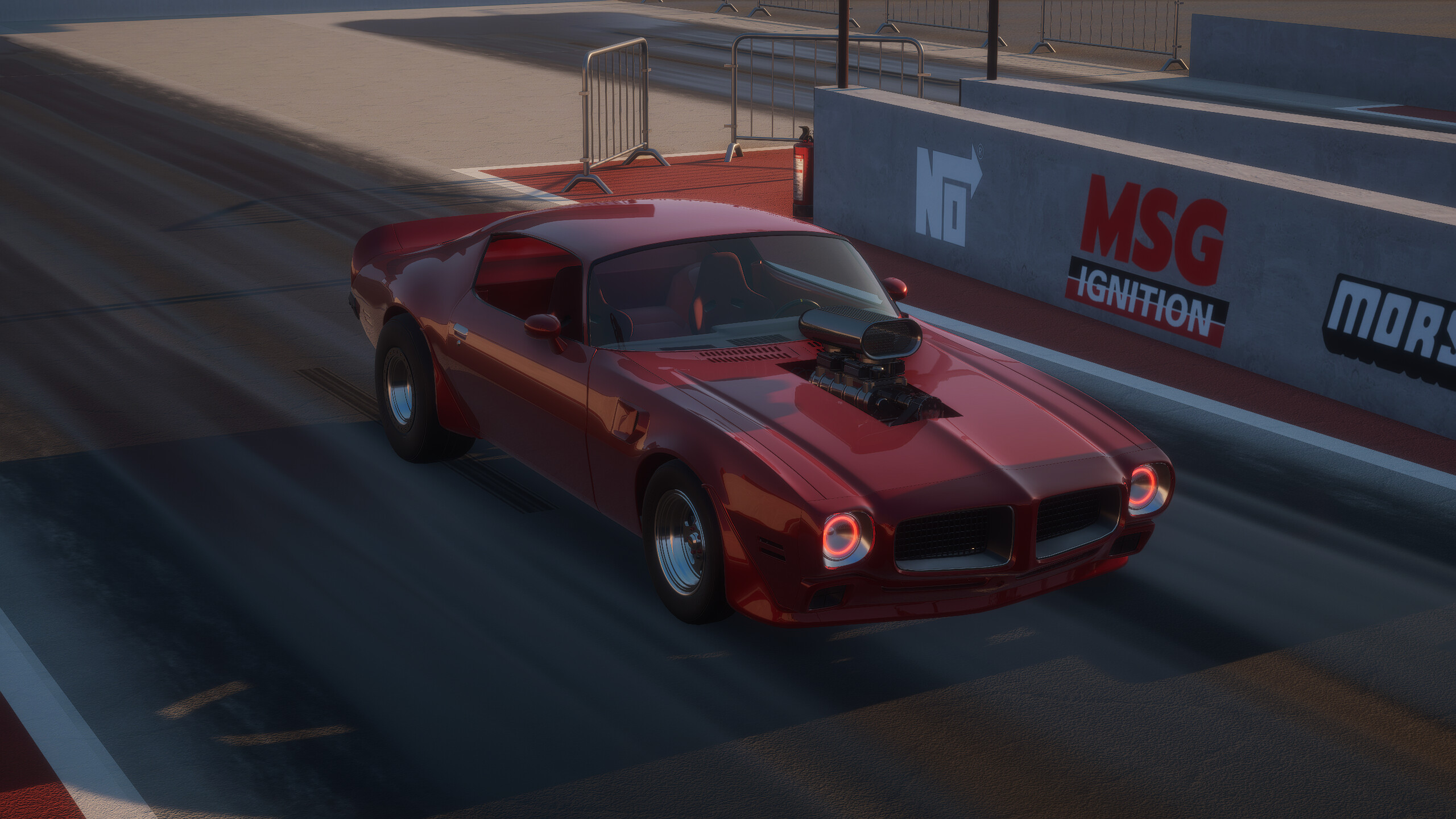
Master the Best Breakout Garage Oval Track Car Build Today
Learn how to optimize your Breakout Garage oval track car build. Discover suspension secrets, gear ratios, and engine tuning tips to dominate the leaderboard.
Published:
Video Guide
I BUILT THE BADDEST OVAL TRACK CAR IN BREAKOUT GARAGE!! (THEN TOTALED IT)Table of Contents
Building a high-performance machine in this Texas-inspired racing simulator requires more than just raw horsepower; it demands a deep understanding of mechanical synergy. To create the ultimate breakout garage oval track car build, you must balance weight distribution, suspension geometry, and high-speed stability. Whether you are converting a drag-focused Impala or starting fresh with a rusty Inline-6, mastering the breakout garage oval track car build process is the only way to climb the leaderboard and secure those $10,000 time trial payouts.
In this guide, we will break down the specific tuning parameters, parts selections, and driving techniques used by top community members to turn heavy American muscle into agile circle-track contenders. From adjusting spring heights to choosing the perfect gear ratio, every click in the garage directly impacts your lap times in Marfa, TX.
Choosing the Right Base for Your Oval Build
In Breakout Garage, not all chassis are created equal when it comes to the sustained side-loading of an oval track. While many players start with drag racing in mind, the transition to oval racing requires a vehicle that can handle high-speed cornering without rolling over.
Community reports suggest that the '69 Charger and the Impala are popular choices due to their wide wheelbases, which offer better stability during high-speed transitions. However, a common strategy among experienced players is the "interchangeable car" concept. By keeping a variety of parts in your inventory, you can switch a single vehicle between drag, road course, and oval configurations depending on the day's events.
Chassis Type
Strengths for Oval
Weaknesses
Best Starting Engine
Heavy Muscle (Impala)
High stability, great top-end speed
Hard to turn, high tire wear
V8 with Turbo or Blower
Pony Cars (Charger)
Balanced weight, good aerodynamics
Prone to oversteer
Naturally Aspirated V8
Lightweight I6 Builds
Excellent turn-in, low weight
Lacks top-end power
Turbocharged I6
The Inventory Strategy
Always keep your drag racing slicks and high-ratio rear ends in your inventory. This allows you to revert your build for money-grinding at the drag strip if an oval experiment goes wrong and results in a costly wreck.
Suspension Tuning: The Art of Turning Left
The most critical component of a breakout garage oval track car build is the suspension. Unlike drag racing, where you want maximum rear-end squat for traction, oval racing requires a "staggered" setup to help the car naturally lean into the left-hand turns.
The Left-Side Lowering Technique
A frequent tip shared in community circles involves lowering the left-side spring heights relative to the right side. This shifts the center of gravity and pre-loads the suspension for the constant left-hand banking. However, be cautious: if you go too low (e.g., setting springs to 0 or 10), you risk the tires rubbing against the fenders, which significantly slows you down.
Spring Rates and Shocks
Adjustable shocks are a mandatory upgrade for any serious oval racer. While stock shocks are fine for cruising, adjustable units allow you to stiffen the right-front corner to resist "diving" during entry and soften the rear-left to help with exit traction.
Tuning Parameter
Oval Track Recommendation
Why?
Left Front Spring Height
15mm - 18mm
Lowers COG for turn-in stability.
Right Front Spring Height
20mm - 22mm
Prevents bottoming out under side-load.
Rear Spring Rate
45 - 55
Balances traction and body roll.
Shock Stiffness (Right)
Level 6-8
Resists leaning toward the wall.
Shock Stiffness (Left)
Level 3-5
Allows for better weight transfer.
Drivetrain and Gearing for High-Speed Ovals
One of the biggest mistakes new players make is taking their drag racing gear ratios onto the oval. A 4.11 rear-end ratio is excellent for a 60-foot launch, but it will leave you bouncing off the rev limiter halfway down the backstretch of a two-mile track.
For a successful breakout garage oval track car build, you need a "taller" gear ratio. Ratios like 3.08 or even 2.73 are preferred. These allow the engine to stay within its power band at high speeds without overheating or over-revving.
Transmission Choices
While automatic transmissions are easier for beginners, the 3-speed or 4-speed manual transmissions offer much better control over engine braking and mid-corner torque. If you find your car "bogging down" in the center of the turn, downshifting to second gear can provide the necessary punch to rocket off the corner.
Differential Setup
A limited-slip or locked differential is essential. You need both rear wheels pushing equally to maintain a slide or a controlled arc through the banking. Players have reported that open differentials often lead to "one-tire fires," where the inside tire spins uselessly, causing the car to lose momentum.
Wheel, Tire, and Spacer Configurations
The physical stance of your car determines how much grip you can generate. In Breakout Garage, spacers aren't just for looks; they widen the track of the vehicle, which is the best defense against flipping.
Tire Selection: Slicks vs. Semi-Slicks
For time trials, Drag Slicks offer the most raw grip, but they can be "twitchy" and prone to causing a rollover if the suspension isn't perfectly tuned. Semi-Slicks are often a safer bet for endurance races, providing a more predictable slide.
The "Stock Car" Stance
To achieve the classic stock car look and performance, many players utilize 50mm spacers on all four corners. This wide stance, combined with 15x10 or 15x12 wheels, creates a massive contact patch.
Tire Size
Recommended Pressure (PSI)
Usage
Front (295/45 R15)
20 PSI
Provides steering response and prevents "hunting."
Rear (295/60 R15)
15 PSI
Maximum grip for acceleration out of the hole.
Narrow (275/40 R15)
25 PSI
Best for reducing rolling resistance on low-power builds.
Tall Tire Danger
Using tires that are too tall (e.g., 60 profile) on a heavily lowered car can cause the physics engine to "catch" the tire on the bodywork, resulting in a violent flip. Aim for a 45 profile if you plan on slamming the suspension.
Engine Optimization: Turbocharging vs. Naturally Aspirated
While the V8 is the king of the oval, don't sleep on the Inline-6. With a performance camshaft, forged pistons, and a Stage 3 Turbocharger, an I6 build can be lighter and easier to handle through the corners than a heavy V8.
Cooling and Reliability
Oval racing involves sustained high RPMs. Ensure you have the best radiator and water pump available. If your engine starts knocking or misfiring mid-race, your lap times will plummet. Community members often suggest performing a full engine teardown and repairing components like the crankshaft and cam shaft to 100% before attempting a record-breaking time trial.
Aerodynamics
Adding a front splitter and a rear spoiler provides actual downforce in Breakout Garage. A front splitter helps eliminate understeer (where the car refuses to turn), while a rear wing keeps the back end planted at speeds exceeding 120 MPH.
Engine Component
Upgrade Priority
Effect
Forged Pistons
High
Increases durability under boost.
Performance Cam
Medium
Shifts power band to higher RPMs.
4-Barrel Carb
High
Essential for fuel delivery in high-power V8s.
Turbo Charge Pipe
Mandatory
Required if running a turbo setup.
Step-by-Step: Testing Your Build
Once you have assembled your breakout garage oval track car build, do not head straight for the $10,000 time trial. A single wreck can result in a $24,000 repair bill, which can bankrupt a new player.
The Garage Dyno: Run your car on the dyno to ensure your torque curve is smooth. An erratic power delivery will make the car hard to control on corner exit.
The Street Test: Take the car out on the Marfa open roads. Practice high-speed donuts and figure-eights to see if the car feels "tippy."
Low-Stakes Racing: Enter a basic dirt oval race or a low-bet drag race to get a feel for the new gear ratios.
Suspension Tweaking: If the car slides too much, soften the rear. If it won't turn, stiffen the rear or lower the front-left.
The Time Trial: Once the car feels like it's "on rails," head to the official oval track and aim for the leaderboard.
Based on player experience, the most common reason for failure is over-tuning. Adding too much power without upgrading the suspension leads to a car that is fast in a straight line but impossible to turn.
Ignoring Tire Pressure: Running 30+ PSI in your tires will make the car bounce over the banking rather than gripping it.
Forgetting Spacers: A narrow car is a flipping car. Always widen your track width.
Wrong Fuel: Ensure you are running E85 if your engine is tuned for it; running low-grade pump gas in a high-compression build will cause immediate engine damage.
Weight Management: Remove passenger seats and rear seats to save weight, but be careful not to make the rear too light, or you will lose traction.
Key Takeaway
The perfect oval build is a balance of a 3.08 rear-end, 50mm spacers, and a staggered suspension height. Focus on stability first, then add power.
FAQ: Breakout Garage Oval Racing
What is the best gear ratio for the Breakout Garage oval track?
For most V8 builds, a 3.08 or 2.73 rear-end ratio is ideal. This allows you to reach high top speeds on the long backstretch without hitting the RPM limiter, which is crucial for a competitive breakout garage oval track car build.
Why does my car flip over when I try to turn left?
Flipping is usually caused by a center of gravity that is too high or a track width that is too narrow. To fix this, install 50mm wheel spacers, use lower-profile tires (like 45s instead of 60s), and stiffen your right-side shocks to prevent excessive body roll.
How do I make money fast for parts?
If you are struggling with the oval, the Road Course or Delivery Missions are great ways to earn cash. A clean two-lap run on the road course can net you $1,500 to $2,500, which can then be reinvested into your oval track car.
Do aerodynamics actually matter in the game?
Yes. According to community testing, adding a front splitter and a rear wing significantly improves handling at speeds over 100 MPH. The splitter reduces understeer, allowing you to carry more speed through the center of the banking.