How to Master Your Breakout Garage General Lee Build
Learn how to complete the perfect Breakout Garage General Lee build with our deep tuning guide, engine swap tips, and paint customization strategies on Steam.
Published:
Video Guide
I BUILT THE GENERAL LEE IN BREAKOUT GARAGE!! (IT SUCKS!)Table of Contents
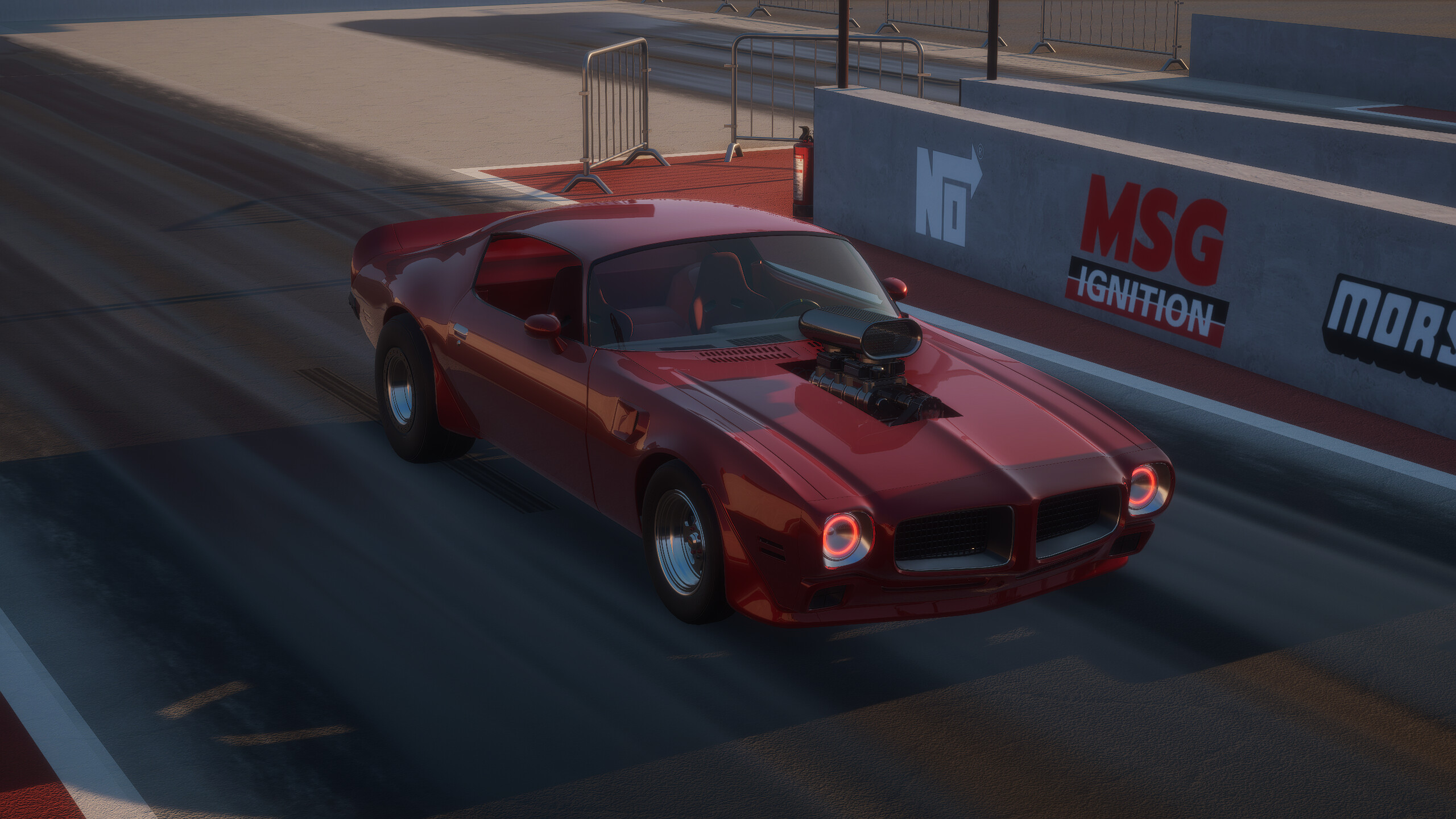
Building an iconic American muscle car is the ultimate dream for many racing enthusiasts, and achieving a high-performance breakout garage general lee build is a rite of passage in this open-world simulator. Breakout Garage, developed by Breakout Studio, offers a deep level of mechanical realism that allows players to transform a rusty used car into a legendary orange speedster. However, creating a functional breakout garage general lee build requires more than just a fresh coat of paint; you need to understand the nuances of big-block engine swaps, carburetor tuning, and suspension geometry to make sure your car doesn't just look the part, but actually wins races.
Quick Answer
To successfully complete a General Lee build in Breakout Garage, start with a Dodge Charger from the used car dealership (approx. $35,000). Focus on a Big Block crate engine swap, apply a custom orange paint job with "01" decals, and prioritize a limited-slip differential to manage the massive torque on the Texas-inspired tracks.
Finding the Perfect Base for Your General Lee
The journey begins at the used car dealership, a central hub in the Texas-inspired open world of Breakout Garage. Unlike modern racing games where cars are often handed to you, this game requires you to drop significant "smackers" on a viable chassis. According to community reports and player experiences, the Dodge Charger is the undisputed king for this specific project.
When browsing the dealership, you will often find two Chargers at varying price points—typically around $35,000 to $36,800. While it is tempting to go for the most expensive option, seasoned builders suggest looking at the body condition rather than the engine. Since you will likely be stripping the motor for a high-performance swap anyway, saving a few thousand dollars on the initial purchase allows for more budget flexibility in the tuning shop.
Vehicle Acquisition Comparison
Feature
Budget Option
Premium Option
Recommendation
Purchase Price
~$35,000
~$36,800+
Budget Option
Engine Condition
~80% Wear
~90% Wear
Irrelevant (Swap planned)
Body Integrity
Fair
Good
Choose the cleanest body
Initial Horsepower
~360 HP
~380 HP
Stock power is temporary
The Visual Identity: Paint, Decals, and Bodywork
A breakout garage general lee build is nothing without its signature look. The game’s customization suite is robust but requires a steady hand. The first step is the paint booth. You want a vibrant, saturated orange—moving the slider toward a "coral" or "poppy" hue often looks best under the Texas sun, even if it looks slightly different inside the garage lighting.
One common hurdle players face is the roof. In the early stages of a build, you might find the car has a vinyl roof or a sunroof that can't be painted. You must ensure you install a hardtop and a matching hood before applying the final layers. The "01" decals on the doors are the next priority. While the game may not have a perfect replica font, using the standard number stickers and scaling them to approximately "74 wide by 64 tall" provides a convincing look.
Visual Modification Checklist
Primary Paint: High-saturation orange (Adjust for outdoor lighting).
Roof: Hardtop conversion (Essential for the decal application).
Decals: "0" and "1" on both driver and passenger doors.
Hood: Standard or slightly raised cowl for engine clearance.
Wheels: Vector-style wheels (American Racing style) for that authentic 60s/70s vibe.
Engine Swaps: Crate Motors vs. Custom Rebuilds
Once the aesthetics are handled, it’s time to address the heart of the breakout garage general lee build. While the stock Hemi-style engines are capable, many players opt for a "Crate Engine" to get a head start on power. However, be warned: a crate engine isn't a "plug-and-play" victory.
In a recent community demonstration, a player swapped in a Big Block crate engine only to find it produced less horsepower than the tuned stock motor initially. This highlights the importance of the Breakout Garage tuning system. You must manually adjust the distributor timing and carburetor settings to unlock the engine's true potential. For a Big Block build, aiming for at least 400–470 horsepower is necessary to stay competitive on the drag strip.
Engine Performance Metrics
Component
Stock Hemi (Tuned)
Big Block Crate (Raw)
Big Block (Tuned)
Horsepower
387 HP
373 HP
470+ HP
Torque
Moderate
High
Very High
Cost
$0 (Included)
~$9,300
~$11,000 (with parts)
Reliability
High
Very High
Variable based on tune
Tuning Secret
Don't just settle for 93 octane fuel. If you've upgraded your heads (e.g., Edelbrock style) and spark plugs, experiment with timing adjustments. Moving the timing towards 12-14 degrees can often bridge the gap between a sluggish 380 HP and a roaring 450 HP machine.
Suspension and Drivetrain: Handling the Torque
The most frequent complaint regarding the breakout garage general lee build is that "it sucks" in the corners. This is usually due to the massive weight of the Charger combined with an open differential. When you apply 400+ horsepower to an open rear end, you will simply spin one tire, leading to the dreaded "one-tire fire" and zero traction.
To fix this, you must install a Limited Slip Differential (LSD). A 3.55 gear ratio is a great middle-ground for the Texas open roads, providing enough low-end grunt for street drags while maintaining a decent top speed for the oval track. Additionally, suspension stiffness is key. Increasing your spring rate to around 35 can help reduce the "wobble" that occurs during high-speed transitions on the road course.
Recommended Drivetrain Setup
Differential: 3.55 Limited Slip (Essential for dual-wheel traction).
Tires: Semi-slicks or high-performance White Walls for the period-correct look.
Tire Pressure: Lowering pressure to ~15-20 PSI can help with drag strip launches, though it may increase tire wear.
Suspension: Stiffened shocks (Rating 35+) to handle the heavy iron-block engine.
Testing Your Build: From Drag Strip to Oval Track
After completing your breakout garage general lee build, you need to validate the performance. The game offers three primary environments for testing: the Drag Strip, the Oval Track, and the Road Course.
On the drag strip, a well-tuned General Lee should be hitting speeds of 107–110 mph in the quarter-mile. If you are struggling to break 100 mph, revisit your carburetor tuning. In the Texas open world, you might encounter other players or NPCs for street races. Remember that while the General Lee is an icon of dirt jumping and oval racing, its long wheelbase makes it a challenge on tight road courses.
Oval Track: Focus on maintaining a steady line; the heavy front end will cause understeer.
Road Course: Use "feathering" on the throttle to prevent the rear end from sliding out during mid-corner acceleration.
Common Mistakes to Avoid
Even experienced builders make errors when finalizing their breakout garage general lee build. One common pitfall is ignoring the cooling system. A Big Block engine generates immense heat; if you keep the stock radiator and cap, you risk a blowout during endurance races. Always upgrade to a heavy-duty radiator to match your horsepower gains.
Another mistake is over-tuning the carburetor without adjusting the ignition. If you notice an "engine misfire" or popping sounds, your air-fuel mixture is likely too lean or your timing is too advanced. Breakout Garage rewards patience—make small adjustments, test on the dyno (or the street), and repeat.
Avoid the "Crate Trap"
Do not assume a more expensive engine is always better. A poorly tuned Big Block will lose to a finely-tuned Small Block every time. Always check your spark plugs and alternator belt tension after an engine swap.
Community Insights and Player Experience
According to "DirtSlinger53" and other prominent members of the Breakout Garage Steam Community, the General Lee is often built as a "tribute" car rather than a pure meta-racer. While it can be made fast, its primary value lies in the "garage life" experience—the process of bolting on parts and hearing that V8 roar for the first time.
Players have noted that while the car can be "pure junk" if left stock, the transition to a semi-slick tire setup and stiffened suspension transforms it into a capable, if slightly wild, drift machine. The joy of the breakout garage general lee build is in the struggle to make a heavy, old-school muscle car behave like a modern racer.
Finalizing the Build: The Next Steps
Once your car is painted, tuned, and tested, the Texas open road awaits. You can participate in endurance races to earn back the money spent on the build or take your General Lee to the dirt tracks to emulate the stunts seen in classic television. The beauty of Breakout Garage is that the build is never truly finished. You might find yourself swapping back to a tuned stock motor for better balance, or going "all-in" with a supercharger later in the game.
Future Upgrades to Consider
Supercharger: For those who want to push past the 600 HP barrier.
Weight Reduction: Removing interior components to improve the power-to-weight ratio.
Custom Gearing: Adjusting the transmission ratios for specific tracks (e.g., short gears for the drag strip).
FAQ: Breakout Garage General Lee Build
How much does a full Breakout Garage General Lee build cost?
A basic build starts around $45,000 (including the car and paint). However, a high-performance version with a Big Block engine swap and suspension upgrades can easily exceed $60,000 to $70,000.
Can I put the Confederate flag on the roof in Breakout Garage?
Currently, the game does not feature a pre-made flag decal. Most players use the custom sticker tool to create a red square or a simplified version of the design to maintain the iconic look of the breakout garage general lee build.
Why is my General Lee build sliding all over the track?
This is usually caused by an open differential or low-quality tires. Upgrade to a Limited Slip Differential (LSD) and install semi-slick tires to improve grip. Stiffening the suspension also helps reduce body roll.
Which engine is best for the General Lee in Breakout Garage?
For authenticity and raw torque, the Big Block V8 is the best choice. However, for players on a budget, a fully tuned stock Hemi can be surprisingly competitive if you master the carburetor and timing adjustments.