Master the Breakout Garage V8 Swap: Complete Tuning Guide
Learn how to master the Breakout Garage V8 swap with this expert guide. Discover the best engine builds, tuning tips, and parts to dominate the drag strip today!
Published:
Video Guide
Breakout Garage - Swapping To A V8!Table of Contents
In the high-stakes world of virtual drag racing, few things are as satisfying as hearing a high-displacement engine roar to life for the first time. If you are looking to push your performance to the absolute limit, performing a breakout garage v8 swap is the most effective way to transform a sluggish cruiser into a quarter-mile monster. While the game’s initial straight-six engines offer a nostalgic charm, they quickly hit a ceiling when competing against top-tier racers on the Texas open roads.
Understanding the mechanics behind a successful breakout garage v8 swap requires more than just buying the most expensive parts in the shop. It involves a deep understanding of weight distribution, gear ratios, and internal engine harmonics. Whether you are building a classic '41 Chevy drag car or a rugged squarebody truck, this guide will walk you through the essential steps, costs, and tuning secrets to ensure your new V8 doesn't just sound powerful—it delivers the times to back it up.
The Fundamentals of a Breakout Garage V8 Swap
Before you start tearing apart your current build, you need to decide which V8 platform best suits your goals. In the current alpha version of Breakout Garage, players generally choose between a standard 350 Small Block Chevy (SBC) or the high-end Billet Small Block. While the stock 350 is a cost-effective entry point, community reports suggest that serious racers should aim for the Billet block to handle the extreme cylinder pressures of high-RPM cam setups and forced induction.
The transition from a straight-six to a V8 involves a complete overhaul of the engine bay. You aren't just swapping the block; you are changing the entire drivetrain's geometry. A common mistake made by beginners is ignoring the weight difference. A V8 engine, especially with a supercharger or heavy-duty headers, changes how the car launches. You may find your car pulling to one side or struggling to hook up if you don't adjust your suspension and tire pressures accordingly.
Why Swap to a V8?
The primary reason for a breakout garage v8 swap is the massive increase in torque and the availability of high-performance aftermarket parts. While a turbocharged straight-six can be fast, the V8 platform offers a higher ceiling for horsepower (often exceeding 600 HP naturally aspirated) and better compatibility with heavy-duty 6-speed transmissions.
Choosing Your Engine Block
The parts shop offers several variations of the Small Block. Based on player experience, here is a breakdown of the initial investment required for the swap:
Engine Part
Stock 350 SBC
Billet Small Block
Purpose
Base Block Cost
~$3,000
~$5,000+
The foundation of your build.
Power Potential
300-450 HP
600-800+ HP
Billet handles higher RPM and boost.
Weight
Moderate
Heavier
Affects front-end lift during launch.
Durability
Standard
High
Billet resists "grenading" at 7,000 RPM.
Step-by-Step V8 Swap Process
Performing a breakout garage v8 swap is a labor-intensive process that requires you to strip the car down to its frame in some cases. You must remove the old engine, transmission, and driveshaft before the new V8 can be seated.
Engine Extraction: Remove the hood, radiator, and all front-end accessories. Disconnect the fuel lines and electrical components.
Drivetrain Removal: You cannot keep a straight-six transmission with a high-torque V8. Remove the old gearbox and clutch assembly.
Frame Inspection: Community members often warn that a weak frame (below 30% integrity) can lead to catastrophic failure under the torque of a V8. Repair your frame before mounting the new block.
Installing the Block: Place the Billet or Stock block. Ensure you have the correct motor mounts.
Internal Assembly: This is where the magic happens. Install your forged crankshaft, connecting rods, and high-compression pistons.
Top-End Setup: Add your cylinder heads (Edelbrock heads are a community favorite), intake manifold, and carburetors.
Essential Components for the Swap
To get the most out of your breakout garage v8 swap, you shouldn't just reuse old parts. Investing in a "Stage 2" or "Stage 3" setup from the start will save you money in the long run.
Component
Recommended Type
Why?
Crankshaft
Forged 350/400
Resists snapping under high torque loads.
Pistons
Forged High Compression
Necessary for high-RPM stability and power.
Connecting Rods
Forged H-Beam
Prevents rod knock and internal failure.
Camshaft
High RPM Cam
Shifts the power band to the 6,000-7,000 range.
Clutch
Stage 2 or 3
Stock clutches will slip immediately with V8 torque.
Advanced Internal Tuning: Forged vs. Stock
Once the physical breakout garage v8 swap is complete, the focus shifts to internal tuning. A V8 is only as strong as its weakest link. If you install a High RPM Camshaft but keep stock connecting rods, you are essentially building a time bomb.
In Breakout Garage, engine knock is a real threat. Player experience shows that running a 350 V8 without proper crankshaft bearings or using worn-out spark plugs can lead to immediate performance degradation. When you move to a V8, you should always check your statistics in the garage. Look for the "Torque Curve"—a healthy V8 should see a steady climb in horsepower up to at least 6,500 RPM before tailing off.
The Impact of Compression Ratios
High-compression pistons are a staple of the breakout garage v8 swap. By increasing the compression ratio (e.g., to 11.8:1), you squeeze more energy out of every fuel cycle. However, this requires precise ignition timing. If your timing is too aggressive, you’ll hear the dreaded "ticking" of engine knock.
Ignition vs. Fuel Cut
When setting your rev limiter for a new V8, most experienced tuners prefer an ignition cut over a fuel cut. An ignition cut is generally safer for the engine internals during high-speed drag passes, preventing lean-out conditions that can melt pistons.
Supporting Systems: Transmission and Drivetrain
A common pitfall after a breakout garage v8 swap is failing to upgrade the rest of the car to handle the new power. A 600 HP engine is useless if it's mated to a 4-speed transmission with "highway gears." To dominate the quarter-mile, you need to look at your differential and gearbox.
Transmission Choices
For the ultimate drag setup, players often choose between a heavy-duty 4-speed manual or a modern 6-speed overdrive. The 6-speed allows for shorter gears in 1st through 4th, providing explosive acceleration, while 5th and 6th act as overdrives for cruising the Texas roads.
Gear Ratio
Launch Feel
Top Speed
Best Use Case
3.08 (Stock)
Sluggish
Very High
Casual cruising/Fuel economy.
3.55 (Sport)
Balanced
High
Street racing and light drag.
4.11 (Drag)
Explosive
Low
Dedicated quarter-mile passes.
The Importance of the Differential
During a breakout garage v8 swap, you should almost always upgrade to a Limited Slip Differential (LSD). An open differential will result in "one-tire fire," where only one wheel spins, wasting all your new horsepower in a cloud of smoke. A 3.55 or 4.11 LSD ensures that both rear tires bite the pavement simultaneously, significantly dropping your ET (Elapsed Time).
Drag Strip Performance and Fine-Tuning
After completing your breakout garage v8 swap, it’s time to head to the track. But don't expect a 10-second pass immediately. You need to dial in your shift points. Using the in-game screwdriver to adjust your redline is crucial.
Community reports suggest that a forged 350 V8 performs best when shifted around 6,800 RPM. If you shift too early, you fall out of the power band; shift too late, and the valves float, causing you to lose momentum.
Don't Forget the Brakes!
A V8-swapped car reaches much higher trap speeds than a stock build. Many players focus so much on going fast that they forget to upgrade from drum brakes to disc brakes. Trying to stop a 110 MPH drag car with stock drums is a recipe for a crashed front valance and an expensive repair bill.
Performance Milestones
What should you expect after a successful breakout garage v8 swap? Here are some typical benchmarks based on community data:
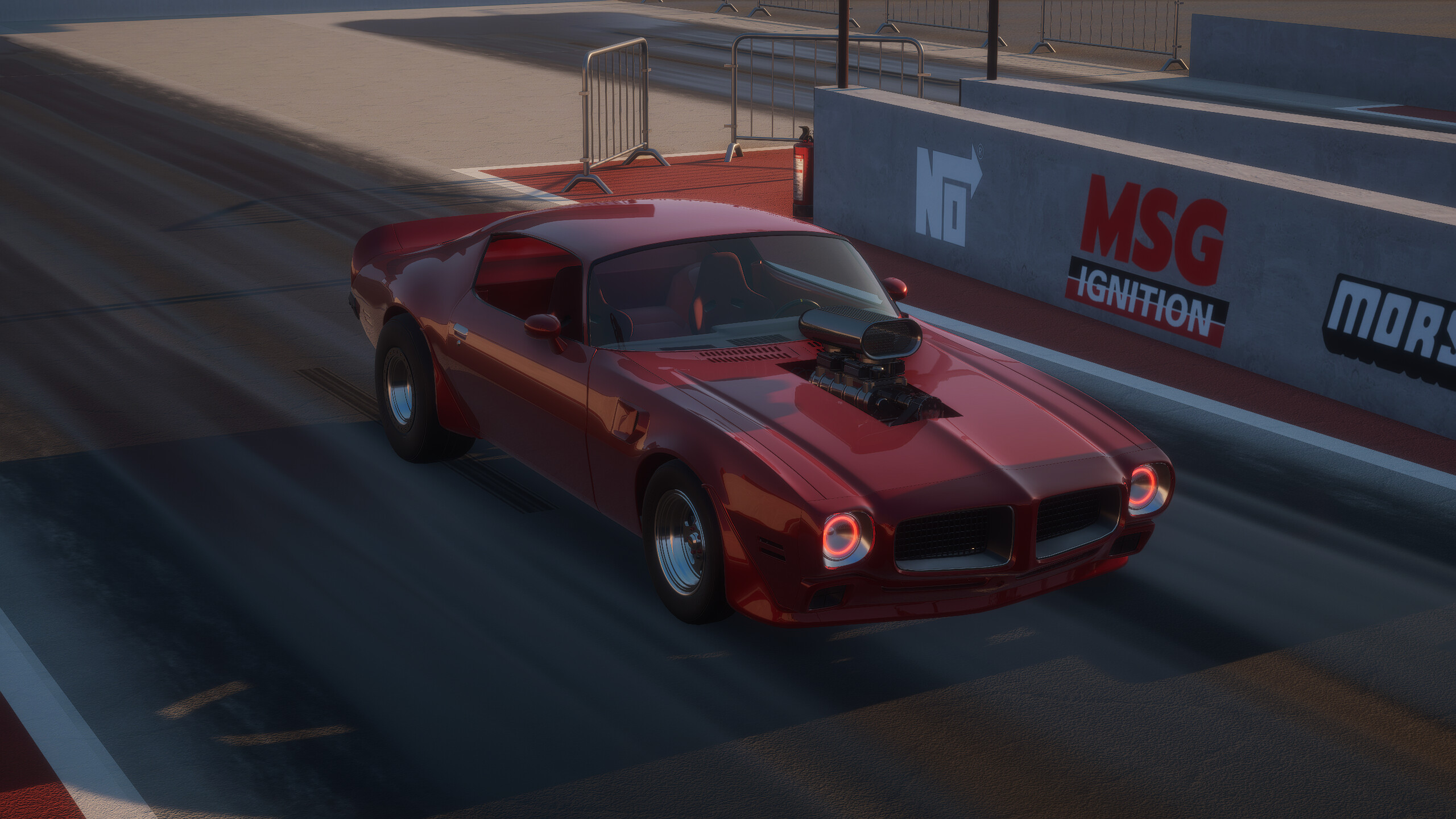
A V8 swap isn't just a mechanical change; it’s a stylistic one. High-performance intakes like the "Tunnel Ram" or a 671 Supercharger physically stick out of the engine bay. To accommodate this, you will need to purchase a hood with a "Large Cutout" from the parts shop.
While it’s tempting to run without a hood for better cooling, this leaves your expensive engine exposed. Furthermore, keep an eye on your body panels. High-torque launches can actually stress the chassis. If your body integrity is low, you might see fenders or mirrors falling off during a high-speed run.
For the latest updates on new parts and community challenges, be sure to check the official Breakout Garage Steam page, where the developers frequently post patch notes regarding engine physics and new swap options.
FAQ: Breakout Garage V8 Swaps
How much does a full breakout garage v8 swap cost?
A basic swap starts around $6,000 to $8,000, including the block, a basic transmission, and essential mounting hardware. However, a fully forged, race-ready V8 with a 6-speed transmission and 4.11 gears can easily exceed $15,000.
Can I put a V8 in any car in Breakout Garage?
Most American muscle cars and trucks in the game support the V8 swap. However, you must ensure you have the correct engine mounts and enough clearance in the engine bay for accessories like headers and large radiators.
Why is my engine knocking after the V8 swap?
Engine knock usually occurs due to one of three reasons: missing crankshaft bearings, incorrect ignition timing, or using low-quality spark plugs. Ensure all internal components are at 100% durability and check your timing with the in-game tuning tools.
Is a supercharger better than a turbo for a V8?
In the current meta, a supercharger (like the 671) provides instant torque which is excellent for drag racing launches. Turbos offer higher top-end power but suffer from "lag" off the line. For the breakout garage v8 swap, the choice depends on whether you prefer the "blower" look or the high-speed pull of a turbocharger.