Ultimate Breakout Garage Engine Swap Guide: Maximize Your Horsepower
Learn how to master the Breakout Garage engine swap process. Discover expert tips for building, tuning, and dominating the drag strip in this ultimate guide.
Published:
Video Guide
Breakout Garage - Swapping To A V8!Table of Contents
When you first dive into the world of Breakout Garage, you quickly realize that the path to victory isn’t just about how you drive—it’s about what lies beneath the hood. Understanding the nuances of a breakout garage engine swap is the single most effective way to transform your struggling starter vehicle into a quarter-mile legend, and it is a fundamental skill every serious player must master to keep pace with the competition.
Whether you are frustrated by the limitations of your stock engine or looking to squeeze every drop of performance out of a high-revving build, knowing when and how to perform an engine upgrade is critical. In this guide, we will break down the mechanics of the upgrade process, help you choose the right power plant, and provide the tuning tips needed to ensure your new motor doesn't just look good on the stand, but performs under the pressure of the lights.
Why Engine Swaps Define Your Success
In Breakout Garage, your engine is the heart of your progression. While you can spend hours adjusting carburetors and ignition timing on a stock setup, you will inevitably hit a performance ceiling where simple bolt-ons are no longer enough to win the high-stakes races found at the drag strip or oval tracks.
A breakout garage engine swap provides a higher baseline for horsepower and a better ceiling for advanced forced induction setups. If you find yourself consistently losing by narrow margins, it is rarely just your driving technique; it is usually a lack of raw potential. Community experience suggests that upgrading to a Small Block Chevy (SBC) platform early in your career provides the most cost-effective path to mid-10-second quarter-mile times.
Performance Potential Comparison
Engine Type
Initial HP
Tuning Ceiling
Best Use Case
Stock 6-Cylinder
150-200
Very Low
Learning basic maintenance
Stock 350 SBC
300-350
Moderate
Foundation for first real build
Billet Small Block
500+
Very High
Competitive drag racing
Blown 671 V8
700+
Extreme
Top-tier exhibition & drag
Preparing for Your Swap: The Essential Checklist
Before you start tearing apart your vehicle, you must ensure you have the funds and the mechanical knowledge to complete the job. A common mistake among new players is buying an engine without budgeting for the mandatory transmission and cooling upgrades required to support that extra power.
Check your clearance!
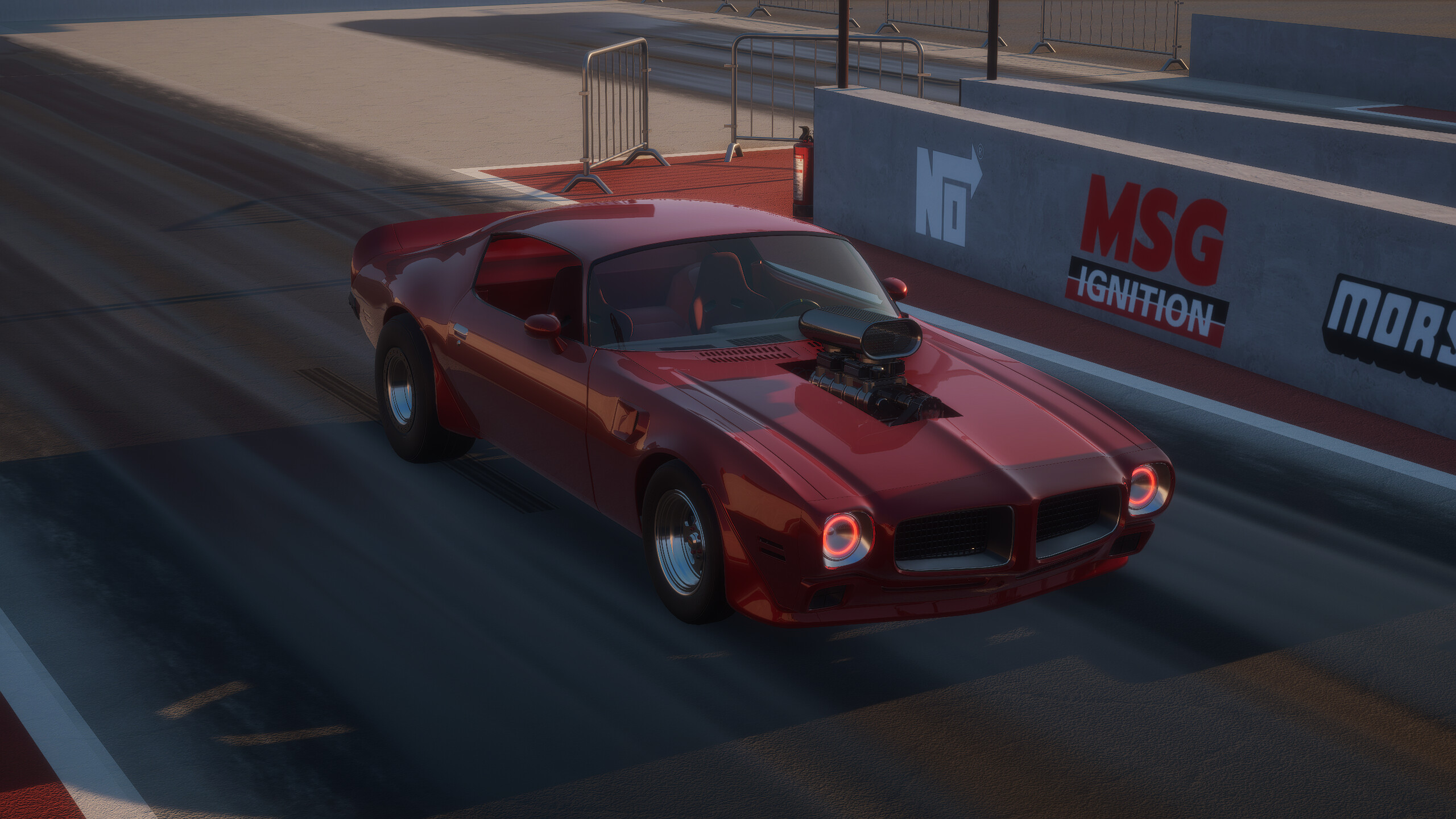
Before purchasing a massive 671 supercharger or a tall tunnel ram intake, remember that these parts often won't fit under a stock hood. You will need to budget for a hood with a large cutout to accommodate these performance parts, or be prepared to run a hoodless build, which will affect your car's aerodynamics.
Necessary Components for a Successful Swap
Transmission: A 4-speed or 6-speed high-performance transmission is mandatory to manage the torque of an upgraded engine.
Cooling: Stock cooling systems will fail under the heat of a high-RPM build. Consider upgrading to an electric fan if available.
Brakes: With great speed comes the need for great stopping power. Do not overlook your drum-to-disc brake conversions.
Forged Internals: If you plan on revving past 6,000 RPM, forged pistons and connecting rods are not optional—they are a survival necessity.
Step-by-Step: Executing the Perfect Engine Swap
The engine bay in Breakout Garage is a puzzle. You cannot simply drop in a new motor; you must strip the old one in the correct order.
Draining and Disconnecting: Start by removing the exhaust system and the radiator pipes. If you don't clear these first, you won't be able to remove the intake manifold or the headers.
Accessing the Block: The engine hoist won't engage unless the engine is completely bare of its accessories. Remove the alternator, alternator bracket, and belts.
The Tear-down: If you are building a custom motor, remember that the order of the bolts matters. Always remove spark plugs and valve covers before attempting to pull the cylinder heads.
The Install: Once the old block is out, the new block drops in. Attach your performance heads (Edelbrock heads are highly recommended by the community) and intake before mounting the carburetor.
Recommended Tuning Order
Step
Action
Objective
1
Adjust Idle AFR
Stabilize cold start performance
2
Set Timing
Balance power vs. detonation risk
3
Shift RPM
Match shift points to engine power band
4
Test & Dyno
Identify power drop-off points
Advanced Tuning: Dialing in Your New Build
Once the engine is in, the work has only just begun. Many players fall into the trap of thinking an engine upgrade is "plug and play." In reality, the game's simulation physics require you to balance your air-fuel ratio (AFR) to prevent your new engine from blowing up.
According to community reports, a lean mixture under boost is the quickest way to end your racing career. When using a turbocharger, aim for an AFR around 11.5 at full throttle. Use your screwdriver to fine-tune the carburetor while the vehicle is on the dyno. If your power curve falls off abruptly before your redline, adjust your ignition timing or fuel delivery to keep the power band flat for as long as possible.
Weight Reduction vs. Aerodynamics
It is tempting to strip your car down to the frame to save weight, but Breakout Garage includes a sophisticated aerodynamics model. If you remove too many body panels, your car might be fast off the line, but it will suffer from massive drag at top speeds.
Find the aerodynamic sweet spot
Try keeping the doors, roof, and trunk intact while removing non-essential parts like heavy bumpers or interior seats. This gives you the best weight-to-drag ratio for circuit racing.
Bumper Removal: Minor weight save, negligible aerodynamic impact, creates a "stripped" look.
Performance Tires: Essential for high-horsepower builds to prevent tire spin during launch.
Next Steps: From The Track to The Podium
Once your breakout garage engine swap is complete, don't rush to the biggest race on the map. Take your time at the local oval or drag strip to test the new power. You can check out the official Steam store page to see upcoming updates that might add even more tuning options.
Always remember that tuning is an iterative process. If you notice your car pulling to one side or the engine knocking, head back to the garage. The game's internal wiki is a goldmine of information—don't be afraid to use it to cross-reference your engine specs against your dyno results.
Frequently Asked Questions
Q: Is a breakout garage engine swap worth the cost for a beginner?
A: Yes, but only if you have sufficient funds to cover the hidden costs like the transmission, clutch, and cooling systems. Do not swap until you have at least double the cost of the engine in your bank account.
Q: Why does my car lose speed after I hit 90 mph even after the swap?
A: Aerodynamics is likely your bottleneck. If you have removed too much bodywork, the wind resistance will prevent you from reaching higher top speeds. Try putting the hood and doors back on.
Q: How do I fix the engine knocking sound?
A: Knocking usually indicates a fueling or timing issue. Use your screwdriver to richen your air-fuel mixture or retard your ignition timing slightly. If the problem persists, your internal components may be damaged and in need of repair.
Q: Can I use the same turbo with my new small block engine?
A: Not necessarily. You need to match the size of your turbo to your engine's displacement and power goals. A turbo that worked for a 6-cylinder might be too small or cause too much lag on a high-displacement V8.