Breakout Garage How to Play: A Complete Beginner’s Guide
Learn breakout garage how to play with this comprehensive guide. Master car building, tuning, and racing in this deep Texas-inspired simulator.
Published:
Video Guide
Breakout Garage - Gameplay TrailerTable of Contents
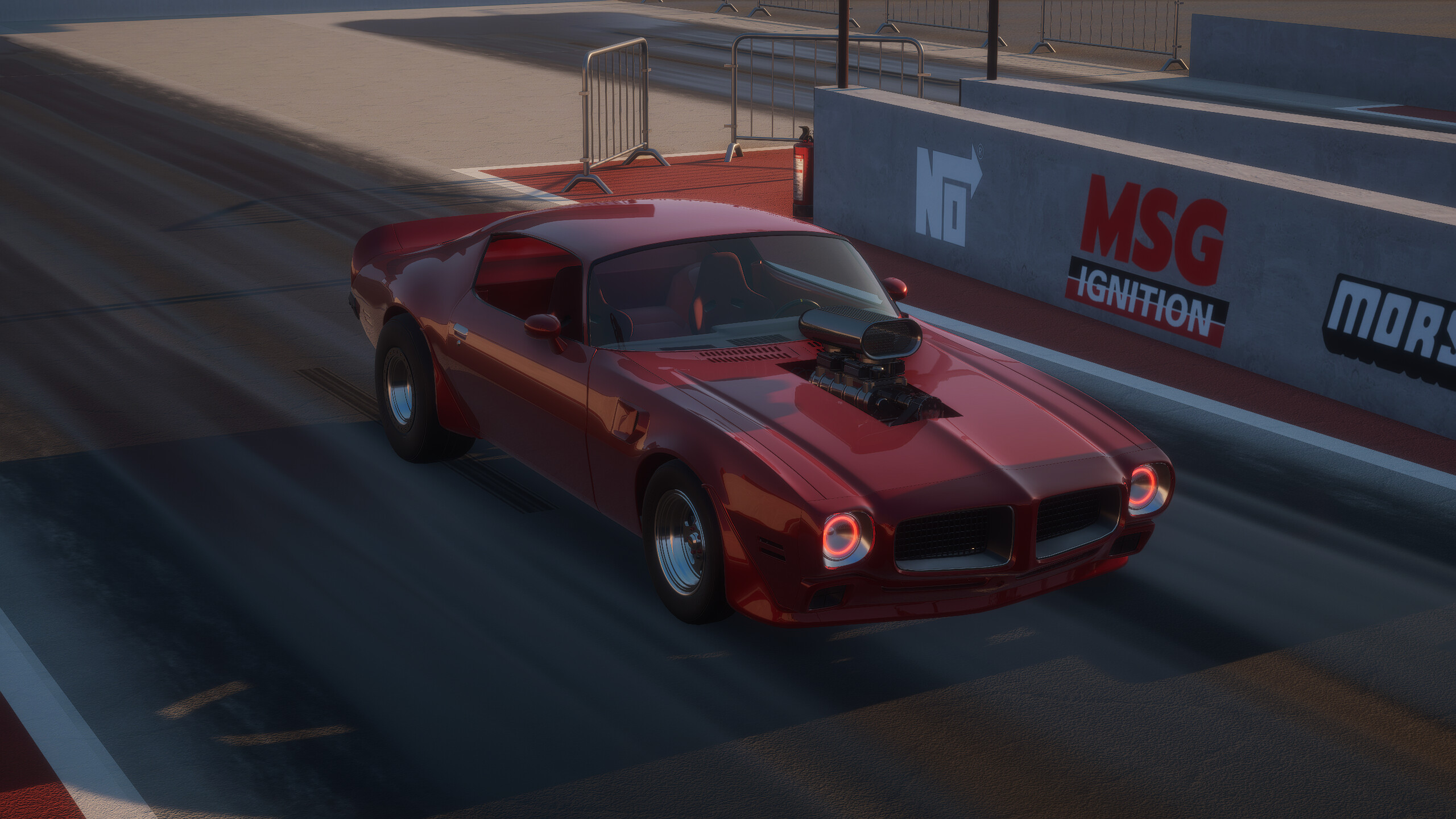
Developing a deep understanding of breakout garage how to play is the first step toward dominating the asphalt of Marfa, Texas. This indie-developed racing simulator offers a level of mechanical depth that goes far beyond your average arcade driver. Created by developers with roots in the Apex Point team, Breakout Garage focuses on the gritty reality of "garage life," where every bolt you tighten and every PSI of boost you add directly impacts your performance on the track. Whether you are rebuilding a rusted-out inline-six or staging a high-powered muscle car at the drag strip, knowing the fundamentals is essential for survival.
If you are just starting your journey, you might feel overwhelmed by the sheer number of parts and tuning options available. This guide on breakout garage how to play will walk you through the initial steps of purchasing your first vehicle, navigating the Texas open world, and mastering the complex mechanic mode. From managing a tight budget to winning high-stakes races, we have compiled the essential strategies you need to turn a "money pit" into a profit-generating race machine.
Quick answer
To succeed in Breakout Garage, you must balance mechanical repairs with strategic racing. Start by buying a cheap used car, stripping unnecessary weight (like seats), and grinding road course time trials to build capital. Use the "TTH" parts shop to replace worn components like camshafts and belts before attempting high-stakes drag races.
Getting Started: Your First Steps in Marfa, Texas
When you first spawn into the game, you are placed in a desolate, Texas-inspired environment. Your primary objective is to acquire a vehicle. Unlike many racing games that hand you a starter car, Breakout Garage requires you to physically visit the used car dealership. This sets the tone for the entire experience: everything is manual, and every choice involves a financial trade-off.
Visiting the Used Car Lot
The dealership is located near the town center. When browsing the lot, you will encounter various American-style classics, such as vehicles resembling the Impala or the Blazer. It is vital to inspect the car’s registry before buying. Pay attention to the mileage and the engine type. An inline-six might be cheaper and lighter, making it great for road courses, while a V8 offers the raw power needed for the drag strip.
Using the Checklist and Wiki
Once you own a car, you will notice a clipboard in your inventory. This is your vehicle registry and checklist. Community reports suggest that new players often overlook the in-game wiki, which is accessible via the computer in your garage. The wiki provides essential information on real-life mechanics, helping you understand how air-to-fuel ratios (AFR) and ignition timing affect your engine’s longevity and power output.
Step
Action
Why It Matters
1
Visit Used Car Dealer
You need a base chassis to start your career.
2
Check Vehicle Registry
Reveals engine specs, weight, and existing damage.
3
Drive to Your Garage
The garage is your hub for all repairs and upgrades.
4
Consult the Wiki
Explains the complex thermodynamics and tuning systems.
Mastering the First-Person Mechanic Mode
The heart of the game lies in the garage. Breakout Garage how to play effectively means becoming a competent mechanic. The game features a highly detailed disassembly system where parts must be removed in a logical order. For example, you cannot remove the cylinder head without first taking off the intake manifold and the valve cover.
Inspecting for Wear and Tear
Parts in Breakout Garage wear out over time. You will hear audible indicators of failure, such as "lifter tick" or "rod knock." When you disassemble an engine, you can check the percentage of wear on each component. According to player experience, parts below 40% condition should be replaced immediately to avoid catastrophic engine failure during a race.
Buying Parts via the TTH Shop
All parts are purchased through the in-game computer using the "TTH" catalog. You can find everything from OEM replacement belts to high-performance billet blocks. One pro tip from the community is to always check your inventory after buying; parts don't just appear on the car, you must manually install them in mechanic mode.
Component
Common Wear Sign
Performance Impact
Accessory Belt
Loud squealing noise
Can snap, causing overheating or battery drain.
Camshaft
Reduced power, misfiring
Affects the engine's ability to breathe at high RPM.
Pistons/Rings
Blue smoke, low compression
Significant loss in torque and horsepower.
Suspension Springs
Bouncy handling, bottoming out
Makes the car unstable during high-speed cornering.
How to Make Money: Grinding and Racing
Money is tight in the early game. You will likely start with around $10,000, but a decent used car and basic repairs can easily eat up $9,500 of that. To progress, you need a reliable stream of income. There are three primary ways to earn cash in the current Early Access version.
Delivery Jobs
For players who prefer a low-risk start, the delivery system offers random jobs. You will be tasked with hauling loads across the Texas map. The payout depends on the distance, the weight of the load, and how quickly you complete the delivery. While not as exciting as racing, it is a safe way to build a "buffer" for your racing bets.
Road Course and Oval Time Trials
Community reports highlight the Road Course as one of the best ways to "grind" for cash. By completing laps within specific time brackets, you can earn significant payouts. For example, a decent lap might net you $1,500, while hitting the top-tier time can reward you with up to $2,500 per run. This is much more efficient than the small $100 bets found at the drag strip.
Drag Racing Bets
The drag strip is where you test your builds. You can stage against AI opponents for bets ranging from $100 to $500+. However, be warned: if you jump the gun (red light) or lose the race, you lose your bet. It is easy to go broke quickly if you challenge faster cars before your engine is ready.
Activity
Risk Level
Payout Potential
Best For
Deliveries
Low
Moderate
Early game stability
Road Course
Low
High
Consistent grinding for upgrades
Drag Racing
High
Variable
Testing builds and high-stakes thrills
Advanced Tuning: Turbochargers and Aerodynamics
Once you have mastered the basics of breakout garage how to play, it is time to look at performance upgrades. The game simulates airflow, thermodynamics, and engine inertia, meaning your tuning decisions have real consequences.
The Turbocharger System
Adding a turbo is one of the most effective ways to gain horsepower, but it requires a complete overhaul of your engine's plumbing. You will need a turbo-specific exhaust manifold, a downpipe, a charge pipe, and a four-barrel carburetor or fuel injection setup. Players often make the mistake of adding boost without upgrading the internals; if you run high boost on stock cast pistons, you will likely experience "rod knock" within a few passes.
Aerodynamics and Weight Saving
Weight is the enemy of speed. A common community tip is to remove the passenger and rear seats to shave off unnecessary pounds. Additionally, the game simulates downforce. Adding a front splitter or a rear spoiler can help stabilize the car at high speeds, especially on the oval track where body roll can lead to a crash.
Weight Reduction Hack
If you are struggling to hit a time trial goal, go into the interior and unmount the seats. This reduces the total mass of the vehicle, improving both acceleration and braking distances without costing a dime.
Racing Mechanics and Control Schemes
Breakout Garage supports a variety of control methods, including keyboard/mouse, controllers, and full steering wheel setups with shifters. How you play will significantly impact your consistency.
Staging at the Drag Strip
To race at the strip, you must "stage" your car. This involves slowly rolling forward until the pre-stage and stage lights on the "Christmas Tree" are lit. Once staged, you must balance your RPM. If you have an automatic, you might hold the brake and gas (brake boosting); if you have a manual, you must master the clutch release.
Tire Selection
Your choice of rubber is critical. Street tires are fine for deliveries, but you will need semi-slicks for the road course or drag radials for the strip. Drag radials provide the "bite" needed to prevent a "one-wheel peel" (where only one tire spins due to an open differential), though you should eventually look into upgrading your drivetrain to a limited-slip differential (LSD).
Tire Type
Best Use Case
Pros
Cons
Street
Daily Driving
Cheap, long-lasting
Poor grip in races
Semi-Slick
Road Course
Excellent lateral grip
Wears out quickly
Drag Radial
Drag Strip
Maximum straight-line traction
Terrible in corners
For more technical details and community updates, you should visit the official Breakout Garage Steam page, which serves as the primary hub for development logs and player discussions.
Common Pitfalls to Avoid
As you learn breakout garage how to play, you will undoubtedly make mistakes. The most common error is neglecting engine cooling. High-performance builds generate immense heat. If you don't upgrade your radiator or thermostat housing, your engine will overheat, leading to warped heads and blown gaskets.
Another frequent issue is "jumping the gun" at the drag strip. The reaction time is measured in milliseconds, and it is tempting to leave as soon as you see green. However, the game’s physics-based starting system means that if you dump the clutch too early, you might lose traction and bog down. Practice your launches in the open world before putting money on the line.
Lastly, be careful with the "Hammer" tool. While it can fix rust and patina, it isn't a magic wand for mechanical repairs. Use the wrench for assembly and the computer for parts procurement. Managing your inventory is just as important as managing your speed.
FAQ: Breakout Garage How to Play
How do I fix my car in Breakout Garage?
To fix your car, you must enter mechanic mode, unmount the damaged part, and check its condition. If it is below a functional threshold, you can either repair it at the workbench (if possible) or buy a new replacement from the TTH shop on your garage computer. Always ensure you have the necessary tools, like the wrench and flashlight, equipped.
What is the fastest way to make money?
The fastest way to make money is currently the Road Course time trials. Players have reported that hitting the "Gold" time bracket can yield up to $2,500 per run. While drag racing is faster, the risk of losing your bet makes the Road Course a more consistent choice for building wealth.
Can I swap engines in Breakout Garage?
Yes, engine swaps are a core feature. You can purchase crate engines from the shop, ranging from OEM replacements to high-performance V8s. Note that an engine swap usually requires you to also upgrade your transmission, drive shaft, and cooling system to handle the increased power.
Why won't my car start after I rebuilt the engine?
If your car won't start, check the basics: Do you have a battery installed? Are the spark plug wires connected? Did you remember the starter motor? In many cases, a car that "cranks but won't fire" is missing a fuel pump or has an incorrect air-to-fuel ratio (AFR) tune on the carburetor. Consulting the wiki is a great way to troubleshoot breakout garage how to play and engine building issues.