Ultimate Breakout Garage Firebird Build: Dominating the Drag Strip
Learn how to optimize your Breakout Garage Firebird build for record-breaking runs. Discover expert tuning tips, weight reduction, and engine secrets.
Published:
Video Guide
Building A 7 Second Firebird - Breakout Garage #6Table of Contents
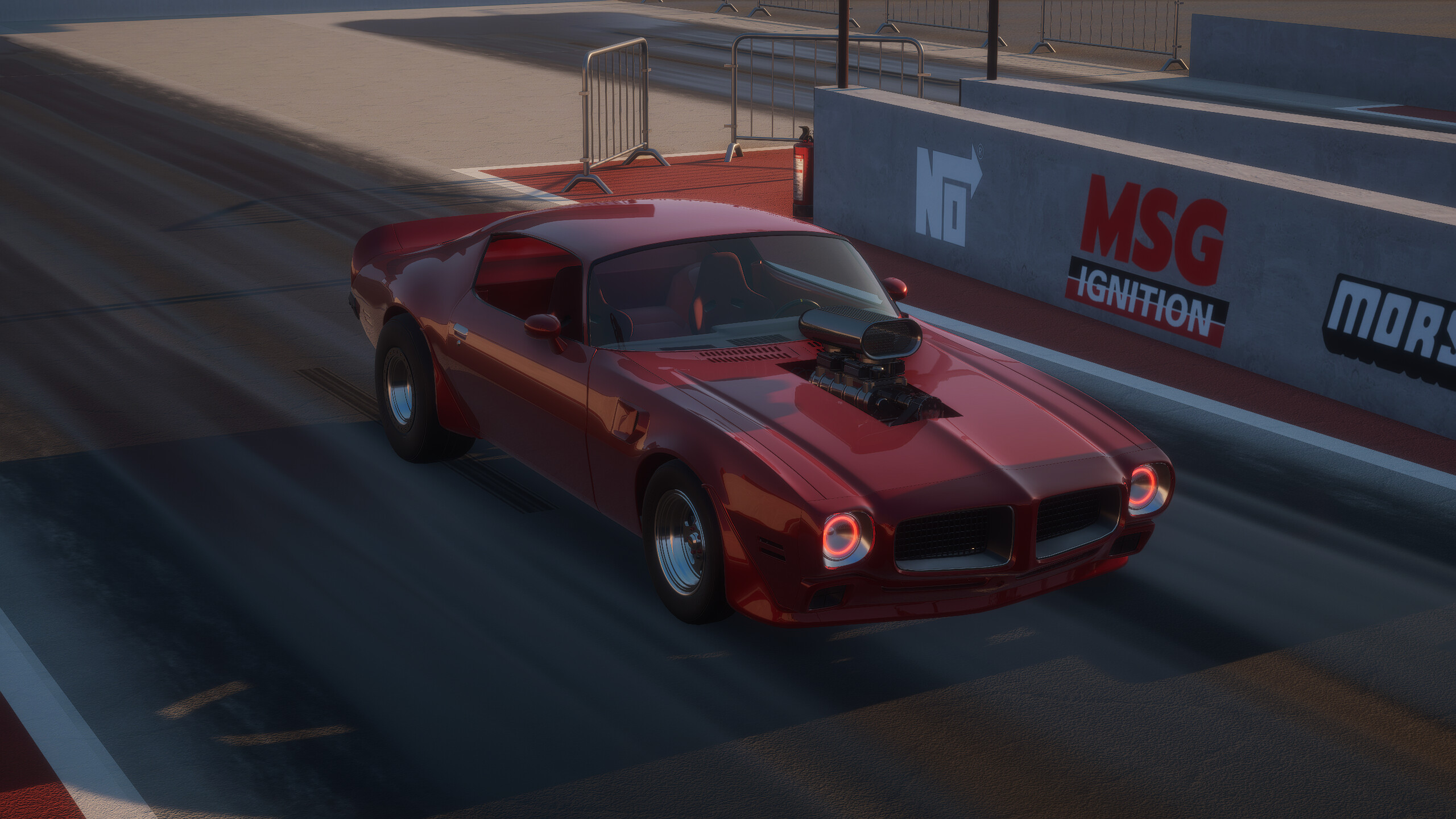
Drag racing in Breakout Garage isn't just about raw power; it is an intricate dance of physics, weight management, and precise mechanical tuning. If you are looking to create the ultimate breakout garage firebird build, you have come to the right place.
Building a car that consistently hits 7-second quarter-mile times requires stripping away the unnecessary and focusing on performance-critical components. In this guide, we dive deep into the specific configurations and tuning philosophies that turn a stock FB22 into a track-slaying machine.
The Foundation: Stripping for Speed
Before you start adding high-performance parts, you must understand the importance of weight reduction in your breakout garage firebird build. Every pound added is a fraction of a second lost. Experienced players recommend removing everything that doesn't contribute to forward acceleration.
Component
Status
Reasoning
Interior Trim
Remove
Heavy, useless for quarter-mile
Dashboard/Carpet
Remove
Significant weight reduction
Brake Calipers
Remove
You are here to go fast, not stop
Inner Fenders
Remove
Airflow and weight optimization
Glass Windows
Replace
Use polycarbonate for lightness
Community reports suggest that stripping the car to its bare essentials—including removing door panels, floor carpets, and non-essential exterior trim—is the fastest way to drop your ET (Elapsed Time). If it doesn't make you go faster or shift better, it doesn't belong in your garage.
Engine and Drivetrain Configuration
The heart of a competitive breakout garage firebird build is a well-tuned power plant. Based on player testing, the 496 stroker forged engine remains the gold standard for high-horsepower builds in the game.
Essential Internal Components
Engine Block: 496 cubic inch stroker forged block.
Camshaft: V3 Performance cam (provides the optimal power curve).
Forced Induction: 8:1 Supercharger with a 2:1 pulley ratio.
Ignition: Full KBY ignition setup including plugs, leads, and box.
While high horsepower is vital, your engine's efficiency depends on its calibration. Always aim to run on E85 fuel to unlock the maximum potential of your high-compression setup.
Don't Forget the Battery!
A common mistake for beginners is forgetting the battery or the necessary timing cover, which prevents the engine from starting entirely. Always double-check your assembly list before heading to the track.
Advanced Suspension and Tire Tuning
Getting that power to the ground is where most builds fail. A balanced breakout garage firebird build needs to launch hard without lifting the front end so high that it loses traction or stability.
Recommended Suspension Settings
Rear Dampers: Set to high (approx. 5,000–6,000) to stabilize the launch.
Spring Rates: Use high spring rates (60,000+) on the front to prevent excessive body roll and lift.
Ride Height: Aim for a slightly forward-rake (front lower than rear) to improve aerodynamics.
Tire Strategy
Tires are the link between your transmission and the asphalt. Using 15-inch billet wheels with 295/60 or 295/55 drag radials provides the largest contact patch. Keep rear tire pressure around 16 PSI for optimal grip during the launch.
Fine-Tuning the Shift Points
Shift RPM is perhaps the most debated topic in the Breakout Garage community. To achieve a 7-second pass, you need to shift at the exact point where torque starts to plateau.
Gear Setup
Shift Target (RPM)
Reason
Initial Launch
3,500 – 3,800
Prevents excessive wheel spin
Up-shifts (1st-3rd)
6,200 – 6,500
Maintains the power band
Final Gear
6,500+
Pushes through the trap speed
If you notice the car "knocking" or the engine struggling at high RPM, experiment with your ignition timing. Lowering your mechanical advance or adjusting the timing per PSI of boost can often eliminate those pesky engine knocks that hinder performance.
Common Mistakes to Avoid
Even a perfectly built car can underperform due to minor oversights. Avoid these common pitfalls to keep your times low:
Improper Staging: Not staging correctly leads to slower reaction times and inconsistent runs. Practice your launch sequence.
Over-Stiffening the Rear: Too much stiffness in the rear can cause the car to bounce, killing your traction. Balance is key.
Ignoring Weight Distribution: If your car pulls to one side, check your suspension arm settings on both the left and right sides.
Neglecting Maintenance: Always repair your engine and components between runs. A worn-out engine will never hit those 7.1s or 7.2s.
FAQ: Mastering the Firebird
Q: Can I build a competitive Firebird without the V3 camshaft?
A: You can, but you will find it much harder to reach the top of the leaderboard. The V3 cam is widely considered the best choice for high-RPM power in the current version of the game.
Q: How do I get rid of the engine knock in my breakout garage firebird build?
A: Engine knock is often caused by incorrect ignition timing or fuel mixture. Try adjusting your mechanical advance and ensuring your AFR (Air-Fuel Ratio) is set properly for the E85 fuel you are using.
Q: Is it necessary to use traction control?
A: While many top-tier players disable traction control to shave off milliseconds, it makes the car significantly harder to drive. If you are a beginner, keep it on until you master the launch, then try running without it.
Q: What is the fastest quarter-mile time achievable?
A: While the top players are pushing into the 6.6s, a well-optimized breakout garage firebird build can consistently run in the 7.1s or 7.2s with the right tuning. Practice, consistency, and minor adjustments are your best tools.