Master the Breakout Garage Platform: Build and Race Now
Discover how to dominate the Breakout Garage platform with our comprehensive guide on engine tuning, drag racing strategies, and car restoration in Texas.
Published:
Video Guide
Breakout Garage - Official Gameplay Trailer | Open-World Car Building & Racing SimulatorTable of Contents
Navigating the breakout garage platform requires more than just a lead foot; it demands the soul of a mechanic and the precision of a professional tuner. As an open-world driving and racing simulator set in the rugged landscapes of Texas, this game challenges players to transform rusted junkers into high-performance drag stars. Understanding the nuances of the breakout garage platform is essential for any player looking to climb the leaderboards and manage a profitable virtual garage.
Whether you are stripping down a Small Block V8 or timing a perfect launch at the drag strip, the depth of simulation here is staggering. Developed by a dedicated team of two at Breakout Studio, the game emphasizes realistic physics, where every part—from the air-to-fuel ratio to the weight of a spare tire—directly impacts your performance. This guide will walk you through the essential systems, from your first purchase at the used car lot to mastering the high-stakes world of Texas oval racing.
Quick Answer
To succeed in Breakout Garage, focus on engine health first. Use the diagnostic tools to identify "lifter tick" or "rod knock," repair internal components like crankshaft bearings before adding power, and always strip unnecessary weight (like rear seats and bumpers) before heading to the drag strip.
Getting Started: The Texas Open World and Economy
When you first step onto the breakout garage platform, you are greeted with a modest budget and a vast, sun-drenched Texas map. The economy is designed to be realistic, meaning every dollar spent on a T350 transmission or a new set of spark plug wires must be earned through grit. Players typically begin their journey at the used car dealer, where an infinite number of randomly generated vehicles await.
The Used Car Lot Strategy
Buying your first car is a financial crossroads. You might find a V8 truck for $8,000, but if the fuel pump is failing and the block is in rough shape, you could be looking at another $2,000 in immediate repairs. Community reports suggest that inspecting the "small block" condition before purchase is the most critical step for beginners.
Initial Purchase Factor
Importance
Why It Matters
Engine Type
High
V8s offer the best torque for drag racing but are costlier to maintain.
Body Condition
Medium
Rust is cosmetic, but missing panels reduce weight (a hidden benefit).
Transmission Health
High
A slipping automatic transmission will ruin your 1/4 mile times instantly.
Tire Type
Medium
Street tires lack grip; you’ll eventually need drag slicks for competitive racing.
Early Game Income: Deliveries
Before you can afford a Whipple Supercharger, you’ll likely need to work for the postal service. The delivery system pays based on load weight, distance, and time. However, be warned: loading down a junker with heavy packages will affect the suspension and braking distance.
The Mechanic Mode: Deep Customization and Repair
The heart of the breakout garage platform is the first-person mechanic mode. Unlike arcade racers, you don't just "upgrade" a car; you build it. The game simulates engine thermodynamics, airflow, and even the compression ratio of your cylinders.
Diagnosing Wear and Tear
One of the most praised features by the player community is the audible wear system. If you hear a "ticking" sound from the engine bay, it’s often a sign of worn lifters or poorly adjusted valves. Ignoring these sounds leads to catastrophic engine failure.
Common Engine Issues and Fixes:
Lifter Tick: Usually requires adjusting the timing or replacing the cylinder head components.
Rod Knock: A sign of failing connecting rods or crankshaft bearings. This requires a full engine teardown.
Slipping Transmission: Often fixed by replacing the torque converter or the entire gearbox unit.
Weight and Aerodynamics
Every part in Breakout Garage has a physical presence. Removing the hood, fenders, and interior seats isn't just for aesthetics; it shifts the center of mass and reduces engine inertia. For drag racing, a lighter front end can help with weight transfer to the rear wheels, though it may make the car harder to handle at high speeds.
Component
Weight Impact
Performance Benefit
Rear Seats
Low
Minor weight reduction; zero cost.
Hood/Fenders
Medium
Improves cooling and reduces weight; increases drag.
Spare Tire
Low
Easy removal for a quick tenth of a second gain.
Crate Engine Swap
High
Massive power increase but requires significant structural tuning.
Mastering the Drag Strip: From Pro Tree to Prep
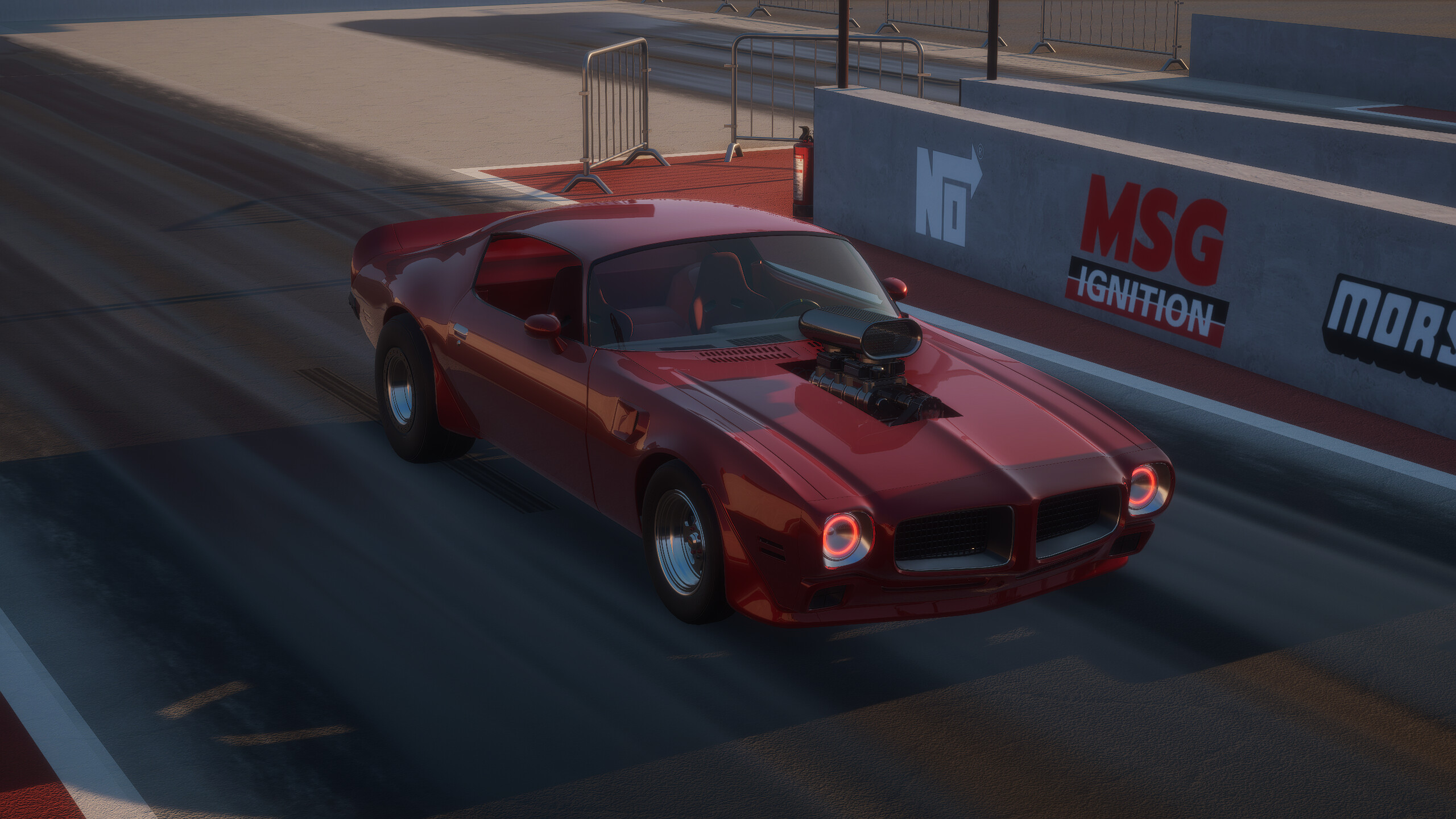
The drag strip is where the breakout garage platform truly shines. The game offers both 1/4 mile and 1/8 mile tracks with various environmental conditions. Success here is determined by three factors: your launch, your shift points, and your track prep.
Understanding the Tree
You will encounter two main types of starting lights:
Standard Tree: The yellow lights flash in sequence, giving you time to anticipate the green.
Pro Tree: All three yellow lights flash simultaneously, followed immediately by green. This requires lightning-fast reaction times.
Track Prep vs. No-Prep
"Prep" refers to a sticky substance (traction compound) applied to the track. A prepped track allows for much higher grip, meaning you can launch at higher RPMs without spinning your tires. On a "No-Prep" or "Green" track, you must feather the throttle to avoid sideways slides, a common challenge for high-torque muscle cars.
The Manual Advantage
While automatic transmissions are easier for beginners, switching to a manual gearbox allows you to hold the engine at its peak power band. Community racing experts recommend manual shifting to shave off those crucial milliseconds during the 2-3 gear transition.
Advanced Tuning: AFR and Ignition Timing
For those who want to extract every ounce of horsepower, the breakout garage platform provides a deep tuning menu. This isn't just a slider for "power"; it involves managing the air-to-fuel ratio (AFR) and ignition timing.
Tuning for Fuel Octane
The fuel you put in your tank matters. Higher octane fuels allow for more aggressive ignition timing and higher boost levels without causing "knock" or detonation. If you are running a supercharged setup, you must ensure your AFR is rich enough to prevent the pistons from melting under high heat.
Suspension and Gearing
A car that makes 1,000 horsepower is useless if it can't put that power to the ground.
Gearing: Short gears provide better acceleration but lower top speeds. Long gears are better for endurance or oval racing.
Suspension: Adjusting the stiffness of your rear shocks can prevent the car from "squatting" too much, keeping the tires planted firmly during the launch.
Tuning Parameter
Effect
Risk
Ignition Timing
Increases throttle response and peak HP.
Too much advance causes engine knock/failure.
Air-to-Fuel Ratio
Optimizes combustion efficiency.
Lean mixtures (too much air) lead to overheating.
Tire Pressure
Lower pressure increases the contact patch (grip).
Too low causes instability and rim damage.
The Future of the Breakout Garage Platform
Currently in Early Access on the official Steam page, the developers have outlined an ambitious roadmap. While the core mechanics of the breakout garage platform are solid, the community is eagerly awaiting the expansion of the "Career Mode" and the addition of more diverse racing venues like dirt tracks and junkyards.
Oval Racing and AI
The oval racing facility is currently one of the most challenging areas. Unlike the straight-line speed of the drag strip, oval racing requires a balanced car that can handle sustained high-speed cornering. The AI racers are known to be "ruthless," so players are advised to build a dedicated race car with a roll cage and racing suspension before entering these events.
Damage is Real
Breaking a headlight or crumpling a fender isn't just a visual bug. Damage to the frame can permanently affect the car's alignment, making it pull to one side. Repairs are expensive, so always weigh the risk of "cutting across the grass" against the potential repair bill.
FAQ: Navigating the Breakout Garage Platform
How do I fix the "engine ticking" sound in Breakout Garage?
The ticking sound is usually a wear indicator for the top end of your engine. You should check the distributor, spark plugs, and cylinder head components. In the mechanic mode, you can inspect each part; if the percentage is low, use the "Fix" tool or buy a replacement from the SBC (Small Block) parts catalog.
Can I play Breakout Garage with a racing wheel?
Yes, the breakout garage platform supports steering wheels and shifters. Using a wheel provides much better throttle and brake modulation compared to a keyboard, which is vital for maintaining traction on unprepped tracks or during high-speed oval maneuvers.
What is the fastest way to make money early on?
While drag racing offers high rewards, it also carries the risk of entry fees and engine damage. Most players recommend grinding out a few postal delivery jobs first. These jobs are low-risk and provide the necessary capital to fix the essential internal components (like the crankshaft and oil pump) of your first used car.
How does engine swapping work?
Once you have enough money and a suitable garage setup, you can purchase crate engines or pull motors from other vehicles. The game supports various engine types, allowing you to drop a modern V8 into an old-school truck frame. Just remember that a heavier engine will require you to retune your front suspension and potentially upgrade your radiator to handle the increased heat.
By following these strategies and respecting the mechanical depth of the breakout garage platform, you can turn a $10,000 "junker" into a Texas legend. Keep your oil clean, your timing sharp, and your eyes on the lights.