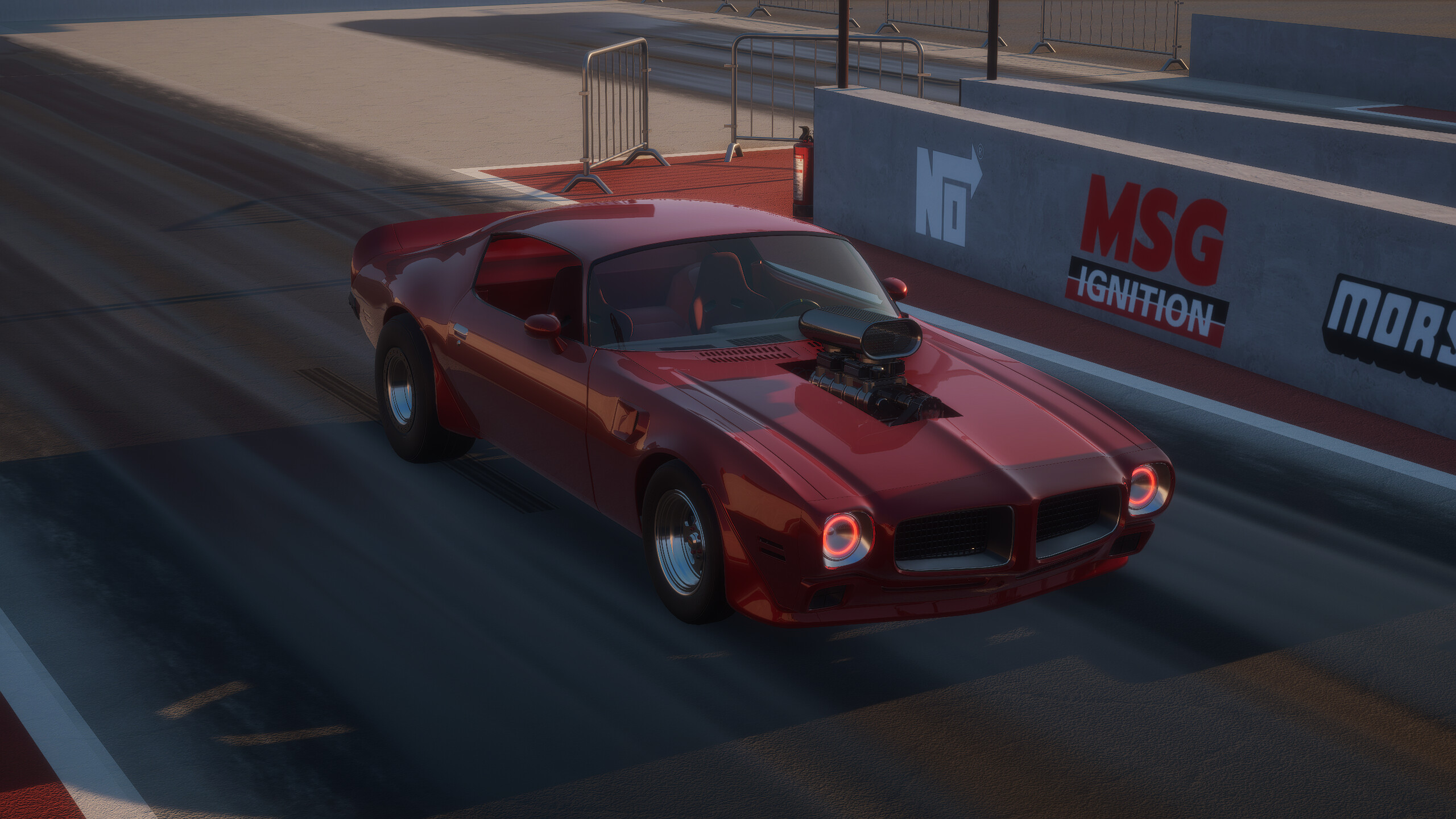
Ultimate Breakout Garage Launch Control & Drag Tuning Guide
Master breakout garage launch control and drag tuning to hit sub-7-second times. Discover the best engine builds, suspension setups, and weight reduction tips.
Published:
Video Guide
BREAKOUT GARAGE: My LOW 7-Second Drag Tune! 🏁 1/4 Mile Setup & Tuning GuideTable of Contents
Drag racing in Breakout Garage is a game of millimeters and milliseconds. If you want to climb the leaderboards and consistently beat the toughest bosses, mastering breakout garage launch control and your vehicle's specific drag setup is non-negotiable. Achieving a low 7-second quarter-mile run requires more than just raw horsepower; it demands a synergy between weight reduction, ignition timing, and suspension geometry. By understanding how to manipulate breakout garage launch control systems through advanced ignition boxes, you can ensure your car leaves the line with maximum grip and minimal wheelspin.
The path to a competitive drag car starts in the garage, where every bolt removed and every PSI adjusted contributes to your final time at the strip. Whether you are struggling with wheelies or finding it hard to break the 8-second barrier, this guide will break down the community-verified "7-second club" setup. We will look at the specific components, tuning values, and driving techniques used by top-tier players to dominate the asphalt.
The Foundation of Breakout Garage Launch Control
In the world of Breakout Garage, launch control isn't just a single button you press; it is a combination of your ignition box settings and how you stage the vehicle. The community has identified that the "Ignition Box Two with Step" is the premier choice for serious drag racers. The "step" function acts as a rev-limiter that allows you to build boost or maintain a specific RPM range before the lights turn green, effectively serving as your breakout garage launch control mechanism.
Without a properly configured ignition box, your car will likely either bog down or blow the tires off upon acceleration. The goal is to find the "sweet spot" where the engine produces enough torque to propel the car forward instantly without losing traction. According to community reports, setting your ignition box with a precise step configuration is the most effective way to stabilize your starts.
Core Launch Strategy
To achieve the best launch, you must equip the Ignition Box Two with Step. This allows you to hold a specific RPM at the starting line, ensuring that when you release the brake, the engine is already in its power band.
Component
Recommended Type
Purpose
Ignition Box
Box Two with Step
Enables precise RPM limiting for launches
Fuel Type
E85
Higher octane for aggressive tuning
Distributor
High-Performance
Ensures consistent spark at high RPM
Pulley Ratio
1.121 (Supercharger)
Optimal boost delivery for the 1/4 mile
Engine Internals and Power Delivery
To make the most of your breakout garage launch control setup, the engine must be built to handle extreme stress. High-performance drag builds typically favor low-compression pistons when paired with forced induction. Specifically, the "+.060 LC V2" low-compression pistons have become a staple for players aiming for the 7-second mark. These pistons allow you to run more boost from the supercharger without risking immediate engine failure.
Pairing these pistons with forged connecting rods and a forged crankshaft is essential. In Breakout Garage, durability matters; an engine at 99% condition will always outperform a neglected one. Players have noted that even a slight drop in engine health can lead to inconsistent times, making it difficult to dial in your breakout garage launch control settings.
Carburetor and Ignition Tuning
Tuning the carburetor is where you bridge the gap between "fast" and "elite." When running E85 fuel, your air-fuel mixture needs to be precise. A common mistake is running too lean in an attempt to save weight or fuel, but in drag racing, you need the cooling properties and power potential of a slightly richer E85 mix.
Ignition Timing: Adjust your distributor to advance the timing slightly for better throttle response.
Supercharger Pulley: The 1.121 ratio provides a linear power curve that helps the breakout garage launch control maintain traction.
Spark Plug Gap: Ensure your ignition system is delivering a strong enough spark to ignite the dense E85/air mixture under high boost.
Weight Reduction: The "Crash Diet"
Every pound you strip from the car is free horsepower. In Breakout Garage, the physics engine rewards players who gut their cars to the absolute bare minimum. To reach a competitive weight of approximately 2,453 lbs, you must be willing to sacrifice aesthetics for performance.
Community experts suggest removing everything that isn't strictly necessary for the car to move and steer. This includes rear bumpers, headlights, trim, door handles, and even wipers. Inside the cabin, you should only have a lightweight driver’s seat and the lightest available steering wheel.
Part Category
Action
Weight Benefit
Interior
Gutted (Seat/Wheel only)
Massive
Body
Carbon Fiber Hood/Splitter
High
Exterior
Remove Bumpers/Lights/Trim
Medium
Unsprung Mass
Remove Brake Calipers (Front/Rear)
High (Rotating Mass)
One of the more controversial but effective tips from community reports is the removal of brake calipers. While this sounds dangerous, the current game mechanics allow the car to function without them at the drag strip, significantly reducing unsprung weight and rotating mass. This allows your breakout garage launch control to spin the wheels up to speed much faster.
Suspension Geometry and Traction
You can have 2,000 horsepower, but it means nothing if you can't put it to the ground. The rear suspension setup is critical for preventing excessive "squat" or "wheelies," both of which kill your elapsed time (ET). For a leaf-spring setup, a spring rate of 35,000 is often cited as the gold standard for stability.
Breakout Garage allows you to adjust damper settings and ride height independently. For drag racing, maxing out the dampers helps control the weight transfer during the launch. Keeping the ride height at its lowest setting (Level 1) lowers the center of gravity, which helps keep the front nose down when the breakout garage launch control kicks in.
Tire and Rim Selection
Tire pressure is a dynamic variable that changes with track temperature, but starting points are well-established. For the rear, large 15x15 billet rims paired with 395/40/15 tires provide a massive contact patch. Running these at approximately 16 PSI allows the sidewall to "wrinkle" and absorb the initial shock of the launch.
On the front, you want the narrowest, lightest setup possible to reduce rolling resistance. 17x4.5 rims with 135/30/17 tires are the preferred choice. These should be pumped up to a much higher pressure (around 45 PSI) to minimize the surface area touching the track.
Tire Warming
Always perform a burnout to get your rear tires up to temperature. Warm tires are "stickier," which directly improves the effectiveness of your breakout garage launch control and reduces the chance of spinning out at the 60-foot mark.
Step-by-Step Drag Strip Procedure
Once your build is complete, you need to execute the run perfectly. Even with the best breakout garage launch control settings, driver error during staging can ruin a run. Follow these steps for a consistent 7.1 to 7.2-second pass:
Check Engine Condition: Ensure all parts are at 99% health. Repair anything that has degraded.
Track Prep/Burnout: Drive into the water box and perform a burnout until the tires reach optimal temperature.
Pre-Stage: Slowly roll forward until the first set of yellow lights on the Christmas tree illuminates.
Stage: Creep forward until the second set of lights turns on. Stop immediately.
Activate Launch Step: Hold your brake and throttle to engage the ignition box step limiter.
Reaction: Watch the lights. Release the brake as soon as the last yellow light flashes (or just as the green hits, depending on your latency).
If you experience a wheelie that lifts the front tires significantly off the ground, you may need to soften your rear dampers or add a front splitter to increase downforce. A slight wheelie is acceptable, but excessive lift wastes energy that should be going toward forward momentum.
Analyzing the 7-Second Setup Data
To help you visualize the requirements, here is a breakdown of the typical stats for a car capable of hitting these times. Note that these are based on Breakout Garage Steam community findings and may vary slightly based on your specific vehicle model.
Metric
Target Value
Total Weight
~2453 lbs
Differential Ratio
4.11:1
Rear Tire Pressure
16 PSI
Front Tire Pressure
45 PSI
Spring Rate (Rear)
35,000
Piston Type
Low Compression (LC V2)
As noted in various community reports, the 4.11 differential ratio is particularly effective because it provides a strong launch without causing the engine to redline too early in the quarter-mile. If you find yourself hitting the rev limiter before the finish line, you might need to adjust your gear ratios or increase your tire diameter.
Common Mistakes to Avoid
Even experienced players can fall into traps that hinder their performance. One common error is neglecting the "hidden" weight. For example, leaving the dashboard or interior trim inside the car might only add a few pounds, but those pounds add up across dozens of components. A truly gutted car is a fast car.
Another mistake is improper cooling. While you want to remove the radiator fan to save weight, you must monitor your engine temperature between runs. If the engine gets too hot, its performance will degrade, and you'll find that your breakout garage launch control becomes less predictable.
Engine Maintenance
Drag racing puts immense strain on the valvetrain and pistons. After every 3-5 runs, return to the garage to inspect your engine. Running a damaged engine not only results in slower times but can lead to a catastrophic failure that costs more to repair in the long run.
Next Steps for Competitive Racing
Once you have mastered the basics of the 7-second tune, the next step is to participate in community challenges and boss races. Beating the in-game bosses is the most efficient way to earn the currency needed for carbon fiber upgrades and high-end ignition systems.
Keep an eye on the leaderboards to see how other players are adjusting their setups. The meta in Breakout Garage can shift as developers update part physics or introduce new components. Staying active in the community and experimenting with small changes—like a 0.5 PSI difference in tire pressure—can be the difference between a 7.1 and a 6.9-second run.
FAQ: Mastering Breakout Garage Launch Control
How do I enable launch control in Breakout Garage?
To effectively use breakout garage launch control, you must install the "Ignition Box Two with Step." This part allows you to set a secondary rev limit (the "step"), which you can hold at the starting line by applying both the brake and throttle. When the lights turn green, releasing the brake initiates the launch at the pre-set RPM.
Why is my car doing wheelies during the launch?
Wheelies occur when there is too much weight transfer to the rear or too much grip for the current suspension settings. To fix this, try increasing your rear spring rate, stiffening your rear dampers, or installing a front splitter and carbon fiber front bumper to keep the nose down.
What is the best fuel for drag racing in Breakout Garage?
E85 is widely considered the best fuel for high-performance drag tuning. It allows for more aggressive ignition timing and works exceptionally well with supercharged engines using low-compression pistons.
Does engine condition affect my quarter-mile time?
Yes, engine condition is vital. A car with an engine at 99% health will produce more power and more consistent results than an engine at 80% or 90%. Always ensure your parts are fully repaired before attempting a record-breaking run.
By following this guide and refining your breakout garage launch control technique, you will be well on your way to dominating the drag strip. Remember, consistency is just as important as speed—practice your staging and reaction times until they become second nature.